



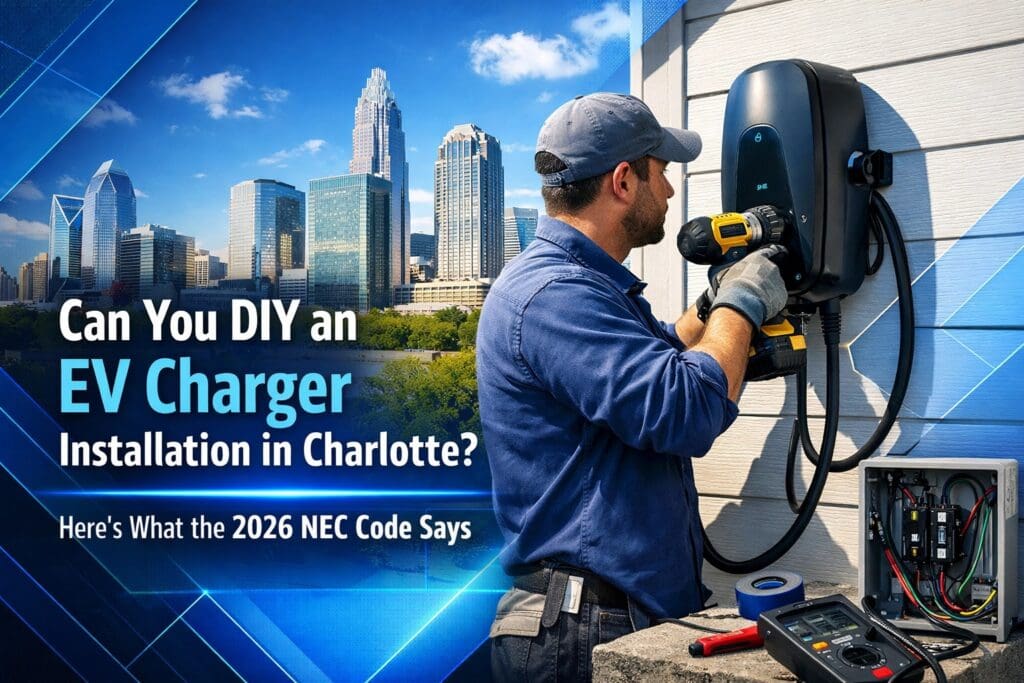
You just bought an electric vehicle. Congratulations! Now you’re looking at that wall in your garage and thinking, “How hard can it be to install a charger?”
You’ve watched three YouTube videos. The guy in the tutorial made it look simple. Just mount the unit, run some wire, connect a few things, and you’re done. Maybe you’ll save a thousand bucks doing it yourself.
Here’s the reality: EV charger installation is not a DIY project. And in 2026, with new National Electrical Code requirements, it’s more complicated than ever.
Let me explain why that YouTube tutorial might end up costing you way more than you’d ever save.
What Makes EV Charger Installation Different
Installing an EV charger isn’t like replacing a light fixture or swapping out an outlet. You’re dealing with a Level 2 charging system that typically requires a dedicated 240-volt circuit capable of handling 40-50 amps continuously for hours at a time.
To put that in perspective, that’s the same power demand as your entire electric dryer or oven. Except your EV charger will run for 4-8 hours every single night.
Most garage circuits are 120-volt, 15-amp circuits designed for basic tools and lighting. They can’t handle an EV charger. You need new wiring, a new breaker, proper grounding, and often a service panel upgrade.
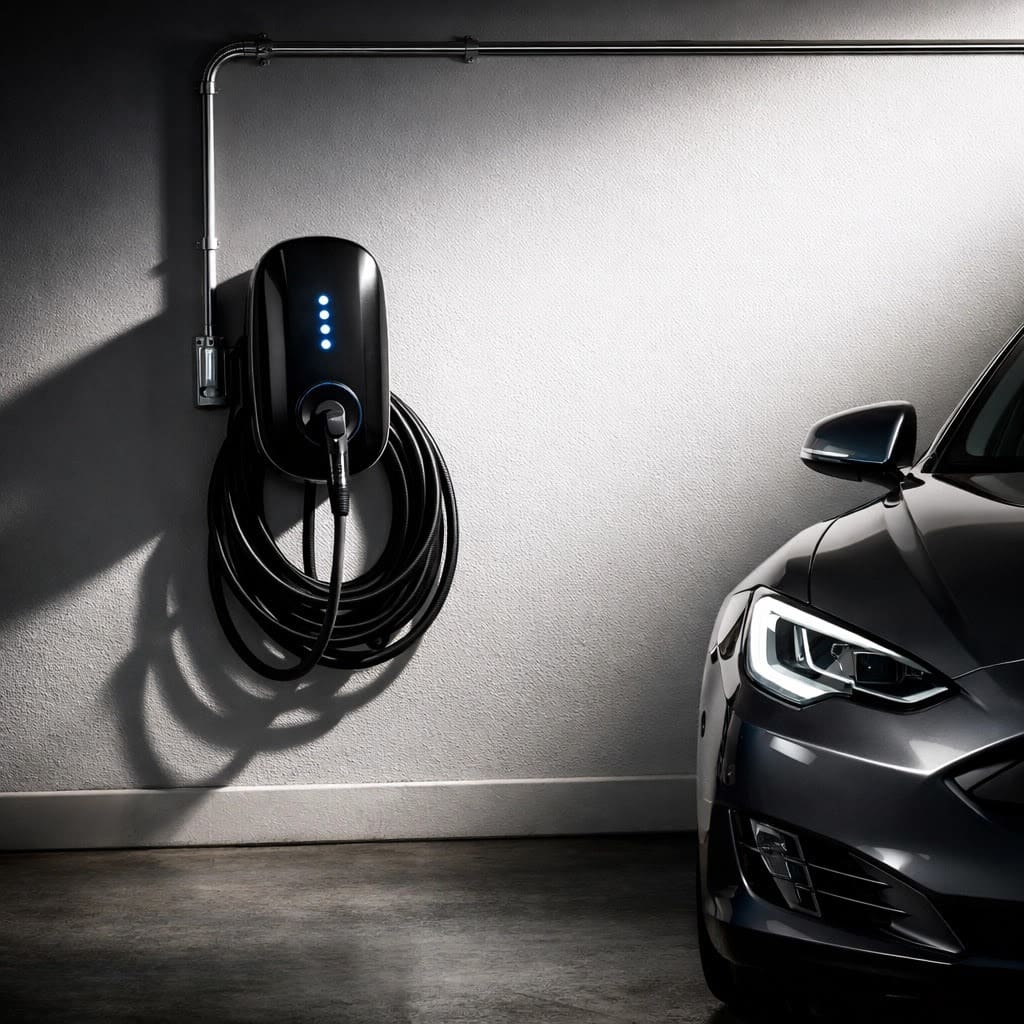
This isn’t cosmetic work. This is serious electrical infrastructure that has to meet strict safety codes and pass professional inspection.
The 2026 NEC Changes You Need to Know
The National Electrical Code gets updated every three years. The 2026 edition includes several new requirements specifically addressing EV charging equipment, and they make DIY installation even more problematic.
Ground fault protection. The 2026 NEC requires enhanced ground fault circuit interrupter (GFCI) protection for EV chargers. This isn’t the simple GFCI outlet you might install in a bathroom. It’s sophisticated equipment that detects even minor ground faults that could cause fires or electrocution.
Load management systems. Many Charlotte homes don’t have the electrical capacity to add a 50-amp EV charger without exceeding their service panel rating. The 2026 code allows load management systems that balance your home’s electrical load dynamically, but these systems require professional programming and integration with your electrical panel.
Ventilation requirements. If you’re installing your charger in an enclosed garage, new ventilation requirements may apply. This isn’t just electrical work anymore: it might involve coordinating with HVAC contractors.
Proper disconnects. The updated code requires specific disconnect means for EV charging equipment. These have to be properly rated, properly located, and properly labeled.
A licensed electrician stays current on these code changes. It’s part of continuing education requirements. A DIY installer watching a YouTube video from 2023? They’re working with outdated information that won’t pass inspection.
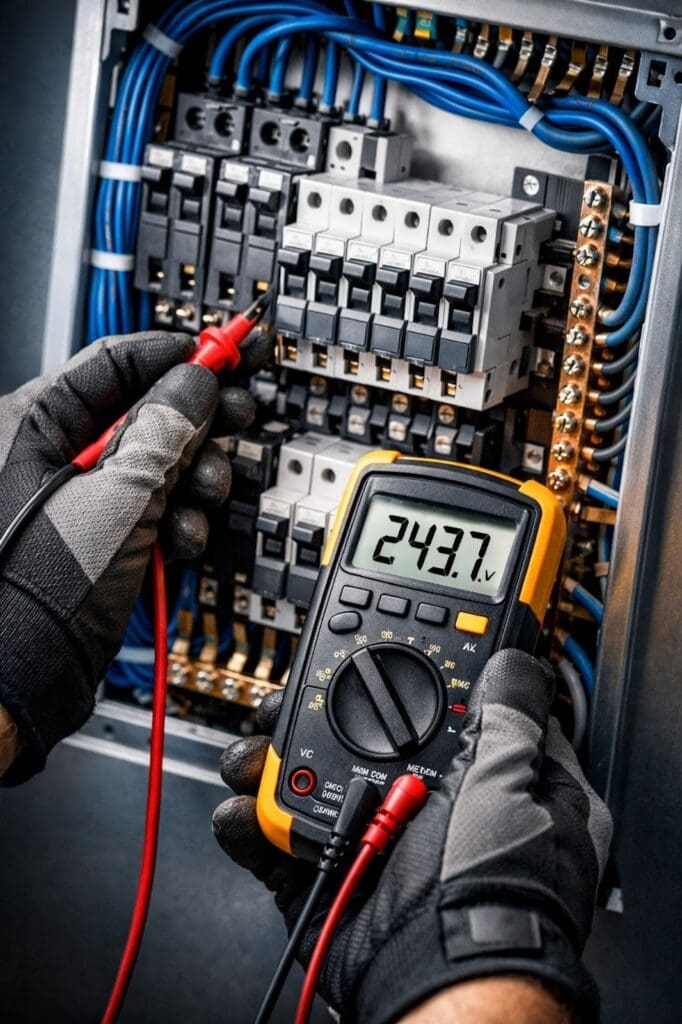
Charlotte and Mecklenburg County Permit Requirements
Here’s where things get really complicated for DIY enthusiasts. In Charlotte and throughout Mecklenburg County, EV charger installations require permits and inspections.
You can’t just install the charger and start using it. The process works like this:
A licensed electrical contractor pulls the permit. Not you. Charlotte requires permits to be pulled by licensed professionals because they’re legally responsible for the work meeting code requirements.
The work gets completed following approved plans. Inspectors know what to look for. They check wire sizing, breaker ratings, grounding, clearances, proper conduit installation, and dozens of other details.
An electrical inspector examines and approves the installation before you can legally use it. If the work doesn’t meet code, you fail inspection and have to fix everything before trying again.
The permit gets closed out with all documentation filed. This matters when you sell your home, which we’ll get to in a minute.
What happens if you skip the permit?
First, it’s illegal. Installing unpermitted electrical work is a violation of local ordinances.
Second, Duke Energy might refuse to provide service. Utility companies can require proof of permitted, inspected electrical work before connecting power to new circuits.
Third, you create a liability nightmare if something goes wrong. More on that in a moment.
The Real Safety Risks
Let’s talk about what can go wrong with an improperly installed EV charger.
Electrical fires. According to the National Fire Protection Association, electrical failures or malfunctions are involved in an estimated 13% of home structure fires. An undersized wire, improper connection, or overloaded circuit creates heat. Heat degrades insulation. Degraded insulation causes arcing. Arcing starts fires.
Your EV charger will pull heavy current for hours every night. Any installation error gets worse over time as connections heat up, cool down, heat up again, causing expansion and contraction that loosens connections.
Electrocution hazards. A 240-volt circuit has serious power. If the charger isn’t properly grounded, if the installation has a ground fault, or if moisture intrudes into an improperly sealed connection, someone could be seriously injured or killed.
Damage to your vehicle. Modern EVs have sophisticated battery management systems. Improper voltage, inconsistent power delivery, or electrical noise from a poorly installed charger can damage these systems. We’re not talking about a $200 repair. We’re talking about battery packs that cost $10,000-$20,000 to replace.
Property damage. I’ve seen DIY electrical work destroy circuit boards in refrigerators, HVAC systems, and home electronics when voltage fluctuations or power surges propagate through the home’s electrical system.
These aren’t hypothetical scenarios. These are real consequences of improper electrical work performed by people who thought they knew what they were doing.
Your Car Warranty and Home Insurance
Here’s something the YouTube videos don’t mention: improper installation can void your EV warranty.
Most electric vehicle manufacturers explicitly require professional installation of home charging equipment. Read your owner’s manual. The warranty section probably includes language stating that damage caused by improper charging equipment installation isn’t covered.
If your DIY installation damages your vehicle’s charging system or battery, you’re paying for the repair out of pocket. That’s potentially tens of thousands of dollars.
Now let’s talk about home insurance.
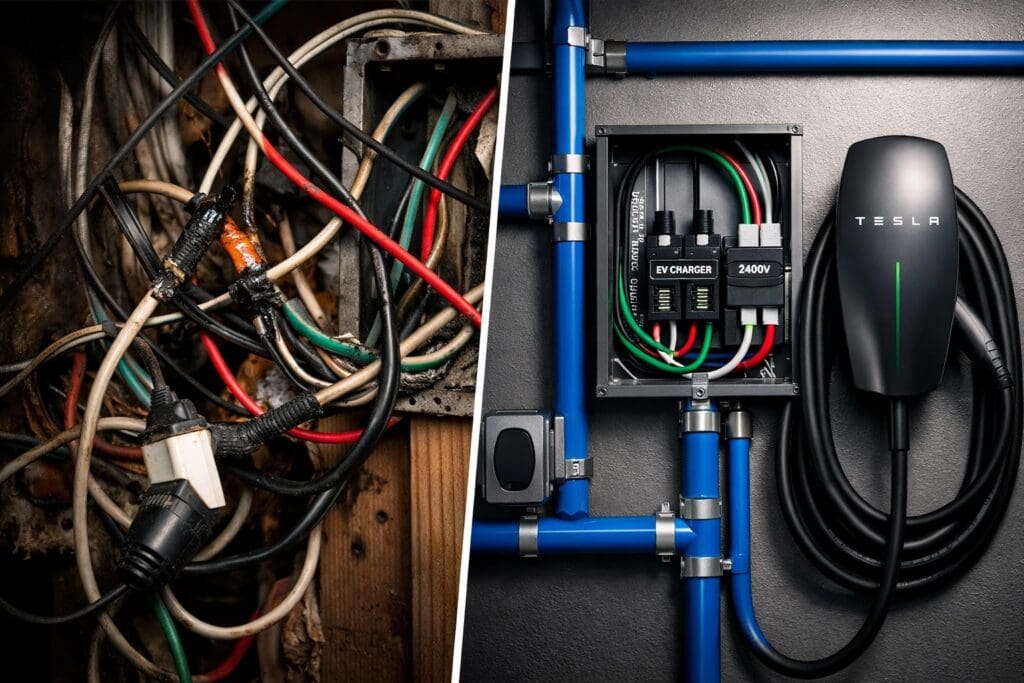
Insurance companies don’t love unpermitted electrical work. If a fire or electrical problem originates from your unpermitted, DIY EV charger installation, your insurance company might deny the claim.
They’ll send an investigator. The investigator will discover the unpermitted work. Your claim gets denied. You’re paying for the damage yourself.
Even if you never have a fire, unpermitted work can come back to haunt you. When you sell your home, the buyer’s inspector might identify the unpermitted charger. Now you’re looking at:
- Paying to have the work inspected and permitted retroactively
- Paying to have a licensed electrician redo any work that doesn’t meet code
- Dealing with a home sale delay or negotiation
- Potentially facing a lower sale price or buyer backing out
That money you saved doing it yourself? It just cost you a lot more.
What Professional EV Charger Installation Actually Includes
When you hire a licensed electrician for EV charger installation in Charlotte NC, you’re getting a lot more than just someone mounting a box on your wall.
Load calculation and panel assessment. We evaluate your existing electrical service to determine if it can handle the additional load. Many Charlotte homes need panel upgrades before adding an EV charger.
Proper circuit design. We size the wire correctly, select the right breaker, ensure proper grounding, and design the circuit to meet current NEC requirements and local amendments.
Permit acquisition. We pull the permits, submit the required documentation, and coordinate with Mecklenburg County inspectors.
Professional installation. The charger gets mounted correctly, wiring gets run through proper conduit, connections are made to professional standards, and everything is tested before we turn it on.
Inspection and approval. We schedule the inspection, meet with the inspector, and ensure everything passes. If any issues arise, we correct them immediately.
Load management integration. If your home needs load management to avoid a service panel upgrade, we install and program the system correctly.
Coordination with Duke Energy. If service upgrades are needed, we handle coordination with the utility company.
Manufacturer compliance. Our installation meets the charger manufacturer’s specifications, protecting your product warranty.
Documentation. You get copies of all permits, inspection approvals, and documentation for your records.
This isn’t about making things complicated for no reason. It’s about ensuring your EV charger installation is safe, legal, code-compliant, and warrantied.
The Hidden Costs of DIY
Let’s do the math on what a DIY installation might actually cost you.
Scenario 1: Everything goes wrong.
- EV charger purchase: $600
- Wire and materials you bought: $200
- Damage to your electrical panel from improper work: $1,500
- Licensed electrician to fix your mistakes and redo the installation: $2,000
- Permit fees and inspection: $150
- Total: $4,450
Scenario 2: It works, but…
- EV charger purchase: $600
- Wire and materials: $200
- Everything seems fine for three years
- Home inspector flags unpermitted work during sale
- Licensed electrician to inspect, permit, and potentially redo work: $1,800
- Sale delay costs: $???
- Negotiation with buyer reduces sale price: $5,000
- Total: $7,600+
Scenario 3: Professional installation from the start.
- EV charger purchase: $600
- Professional installation including permits: $1,200-1,800
- Zero problems, zero delays, zero risks
- Total: $1,800-2,400
Which scenario makes more financial sense?
What About Partial DIY?
Some people think they can meet halfway. “I’ll run the wire and mount the charger, then have an electrician connect it and get it inspected.”
That doesn’t work either.
First, Charlotte requires licensed electricians to perform the electrical work. “The electrical work” includes running the circuit, not just making the final connections.
Second, if you run the wire incorrectly, the electrician either has to redo it (costing you money and time) or refuse the job entirely because they can’t stamp work they didn’t perform.
Third, inspectors know what professional work looks like versus amateur work. If the inspector sees DIY installation during the inspection, they can fail it on that basis alone.
There’s no middle ground here. Either you’re doing permitted, professional installation, or you’re creating problems for yourself.
Yes, Really, Hire a Professional
I know DIY is popular. I know YouTube makes everything look achievable. I know you’re probably handy and have successfully tackled other home projects.
But EV charger installation is different. The stakes are higher. The complexity is greater. The legal requirements are stricter. And the consequences of mistakes are more severe.
You wouldn’t perform your own dental surgery after watching videos. You wouldn’t rewire your home’s main service panel. You wouldn’t install your own natural gas line.
EV charger installation falls into the same category: work that requires professional expertise, proper tools, current code knowledge, and legal authority to perform.
At Patterson Contracting Services, we’ve installed dozens of EV chargers across Charlotte. We know the local code requirements. We work with Mecklenburg County inspectors regularly. We coordinate with Duke Energy. And we stand behind our work with proper licensing, insurance, and warranties.
The investment in professional installation protects your vehicle, your home, your family, and your financial future. That’s worth more than the cost of a YouTube tutorial and some wire from the hardware store.
Ready to get your EV charger installed correctly? Contact us to schedule a consultation. We’ll assess your garage, evaluate your electrical service, and provide a clear quote for professional installation that meets all current code requirements.
Your electric vehicle deserves a charging system that’s as advanced and safe as the car itself. Let’s make that happen the right way.