



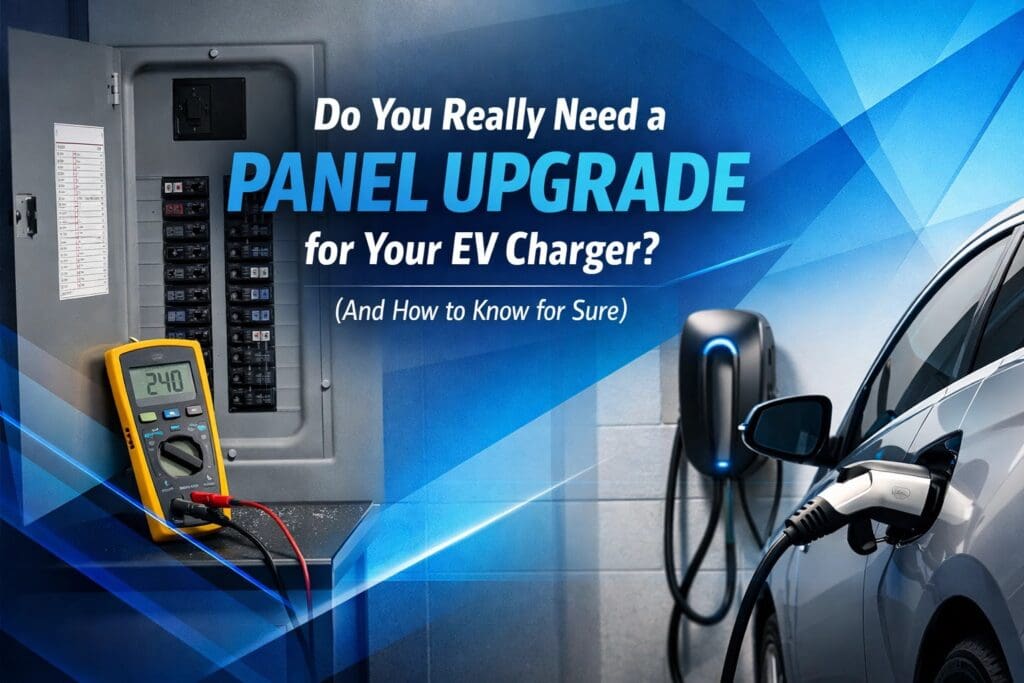
You just bought an electric vehicle. Smart move. Lower fuel costs, better for the environment, and you get to skip gas stations forever.
But now you need to charge it at home. And someone told you that means upgrading your electrical panel. That’s going to cost thousands, right?
An EV charger does not automatically mean your home needs a panel upgrade. A load calculation shows how much capacity the house is using and whether the existing panel can support the charger.
Here’s what most Charlotte homeowners don’t realize: many Charlotte homes can support EV charging without a full panel upgrade. The problem is that many people get talked into expensive upgrades they don’t actually need.
Let me show you how to figure out what your home really needs.
Duke Energy Can Offset the Installation Cost
Patterson is a Duke Energy trade ally and handles the local permitting and program-ready documentation.
Even better: installing your charger might cost a lot less than you think. Duke Energy currently offers a Charger Prep Credit of up to $1,133 for Charlotte-area homeowners to cover the actual electrical prep work, including the wiring, conduit, breaker, and labor. But there is a catch: Duke is incredibly strict about the paperwork. To get your reimbursement, you need a finalized permit and an invoice that perfectly itemizes labor, materials, and permitting costs on separate lines. At Patterson Contracting Services, we know exactly what Duke Energy requires. We structure our invoices specifically for this program and handle the local permitting, handing you exactly what you need to upload and claim your money.
Duke Energy Carolinas’ Flex Savings Option (FSO) rate plan lets EV owners charge overnight for roughly 7 cents per kWh while avoiding the punitive demand charges of older time-of-use plans.
Understanding Your Electrical Panel
Your electrical panel is the heart of your home’s electrical system. It takes power from the utility company and distributes it to every circuit in your house.
Panels are rated by amperage. That number tells you how much total electrical current your home can handle at once.
200-amp panels are standard in newer Charlotte homes. If you bought or built in the last 20 years, you probably have one of these. Good news: you can almost certainly add an EV charger without upgrading.
100-amp panels were common from the 1960s through the 1990s. The rating alone never makes an upgrade automatic. Patterson uses the NEC Article 220 calculated demand load and smart options such as an Energy Management System to save clients money when the existing equipment is safe and serviceable.
60-amp panels show up in older Charlotte homes built before 1960. If you’ve got one of these, you’re definitely looking at an upgrade. Modern homes simply use too much power for a 60-amp panel to handle safely.
But here’s the thing: the number on your panel doesn’t tell the whole story. What matters is how much of that capacity you’re actually using.
Load Calculations: The Math That Matters
When a licensed electrician evaluates your home for EV charger installation in Charlotte NC, they should perform a load calculation.
This isn’t guesswork. It’s actual math based on the adopted state code and local requirements.
A proper load calculation accounts for:
- Your home’s square footage
- Major appliances (HVAC, water heater, stove, dryer)
- Lighting and receptacles
- Any other significant electrical loads
- How much power your EV charger will draw
Patterson applies code-approved demand factors from NEC Article 220 to find the home’s real calculated baseline, called the calculated demand load. That math reflects how a home actually uses power instead of pretending every appliance runs at full output at the same time.
We compare that calculated baseline with the service rating and the charger’s actual draw before recommending an upgrade or an Energy Management System.
EV charging is a continuous load, so the circuit is sized at 125% of the charger’s actual draw. If you want a charger that delivers 48 amps of power to your car, we have to install a 60-amp breaker and size the copper wire to match.
Why Some Electricians Jump to “You Need an Upgrade”
Here’s an uncomfortable truth: doing a proper load calculation takes time and knowledge. It’s easier and faster to just say “you need a panel upgrade” than to sit down and run the numbers.
Some electricians recommend upgrades out of genuine caution. Liability concerns are real. If they underestimate your load and something goes wrong, they’re responsible.
Others recommend upgrades because panel replacement is profitable work. I’m not saying every electrician who recommends an upgrade is trying to upsell you. But you should understand that not all recommendations are based purely on technical necessity.
That’s why getting a second opinion matters. If someone tells you that you need a panel upgrade before you can charge your EV, ask them to show you the load calculation. Ask them what alternatives exist.
Because alternatives do exist.
Load Management Devices: The Smart Alternative
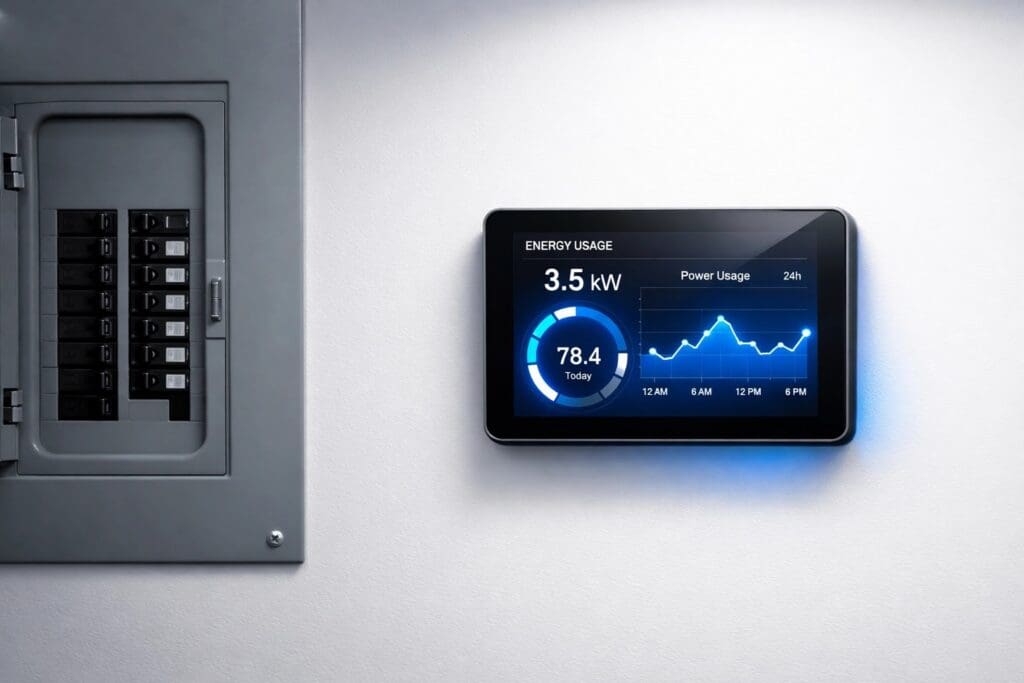
Load management systems have changed the game for EV charging in homes with limited panel capacity.
These devices monitor your home’s electrical usage in real-time. When your panel is approaching capacity, the system automatically reduces power to your EV charger.
Think of it like this: if you’re running your electric dryer, HVAC, and cooking dinner, the load management system might temporarily dial your EV charging down from 50 amps to 30 amps. When those other loads finish, charging ramps back up.
Your car still charges overnight. You just avoid overloading your panel.
Popular load management systems include:
- Emporia EV Charger with Vue energy monitor
- Wallbox Pulsar Plus with a power meter
- Tesla Wall Connector with dynamic power management
While an Energy Management System is a brilliant alternative to a full service upgrade, it does add hardware and labor costs, requires extra equipment, and takes up a noticeable amount of physical wall space next to your main panel.
For many Charlotte homes with safe, serviceable 100-amp or 200-amp panels, an Energy Management System can be a smart alternative when the calculated demand load leaves limited charging capacity.
When You Actually Need a Panel Upgrade
Let’s be clear: sometimes you really do need an upgrade. Here’s when it’s non-negotiable:
Your panel is recalled or dangerous. Federal Pacific and Zinsco panels are known fire hazards. If you have one, replace it immediately, EV charger or not.
Your panel is severely outdated. Panels from the 1950s through 1970s weren’t designed for modern electrical loads. They often have inadequate capacity and outdated safety features.
Your calculated demand load leaves no safe charging capacity. The NEC Article 220 calculation may point to an Energy Management System, a panel correction, or a service upgrade. Patterson shows the math before recommending the path.
You have a 60-amp panel. There’s just no way around this one. Modern homes need more capacity than a 60-amp panel can provide.
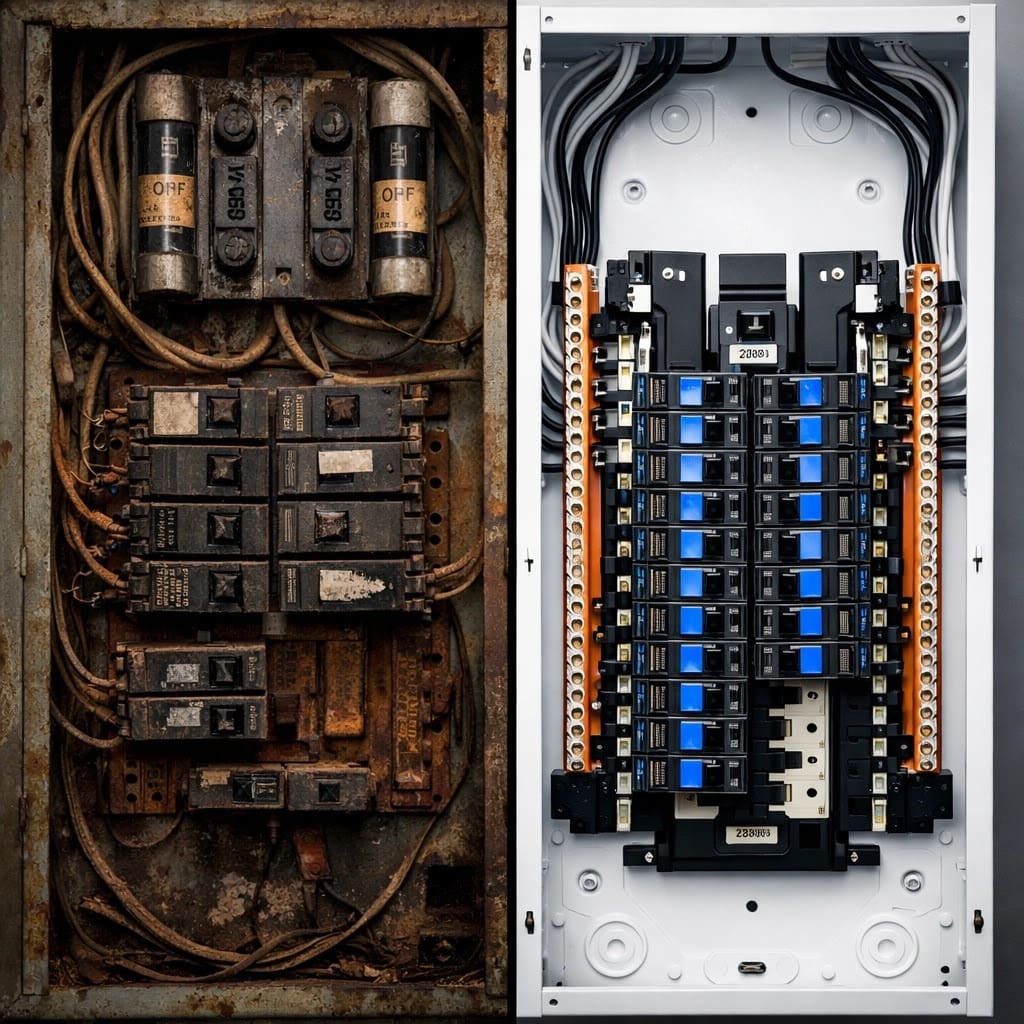
Your panel shows signs of problems. Frequent breaker trips, burning smells, humming sounds, hot panel doors, or flickering lights all indicate serious issues. Don’t add an EV charger. Get the panel addressed first.
When you need an upgrade for electrical panel service in Charlotte NC, it’s not optional. But when you need one, you really need one.
Charlotte-Specific Considerations
Charlotte’s housing stock is diverse, and that affects EV charging planning.
Older neighborhoods like Dilworth, Myers Park, and Elizabeth have homes built between 1920 and 1960. Many still have their original electrical systems. These homes often need significant electrical work before adding an EV charger. Panel upgrades are more common here.
Mid-century homes in areas like Eastover and South Charlotte often have 100-amp or early 200-amp panels. Patterson does not treat that rating as an automatic upgrade. The calculated demand load decides whether the home can use the existing service, an Energy Management System, or a full upgrade.
New construction in Ballantyne, Weddington, and surrounding areas comes with 200-amp panels as standard. These homes almost never need upgrades for EV charging.
Townhomes and condos present unique challenges. You might need HOA approval for EV charger installation. Shared electrical infrastructure can complicate things. And older townhome developments may have undersized panels.
Understanding your home’s age and electrical history helps set realistic expectations.
The Real Cost Comparison
Let’s talk numbers.
Basic EV charger installation with adequate panel capacity generally starts at $900 to $1,200. The wire path, charger location, and permitting can change the total.
Load management adds hardware plus configuration. It is priced for the home after the load calculation.
Installation requiring a panel upgrade includes panel installs that run $2,500 to $6,000, with this year’s average around $5,500. Complex jobs can reach $10,000.
The load calculation tells you which path your home actually needs, and the difference is substantial.
Questions to Ask Your Electrician
When you’re getting quotes for EV charger installation in Charlotte NC, ask these questions:
“Can you show me the load calculation?” A detailed calculation should break down your current usage and available capacity. If they can’t provide this, they’re guessing.
“What’s my panel currently rated for and what am I using?” You need both numbers to understand your situation.
“Have you considered load management as an alternative to a full upgrade?” If they say no or don’t know what you’re talking about, get a second opinion.
“What rebates or incentives are available?” A knowledgeable electrician should know about current Duke Energy programs and federal tax credits.
“Can I see examples of similar installations you’ve done?” Experience matters, especially with newer technologies like load management systems.
These questions help you separate thorough professionals from those who default to “just upgrade the panel.”
Making the Right Decision for Your Home
Here’s my recommendation: start with a proper assessment.
A licensed electrician should visit your home, examine your panel, review your electrical usage, and run a load calculation. That assessment tells you exactly what you’re working with.
If you have available capacity, great. Install the charger and be done.
If you’re close to capacity but your panel is in good condition, explore load management options first. They’re usually more cost-effective than a full upgrade.
If your panel is outdated, dangerous, or genuinely maxed out, then yes, upgrade it. But make that decision based on facts, not assumptions.
At Patterson Contracting Services, we start every EV installation project with a thorough assessment. We show you the numbers. We explain your options. And we help you make the most cost-effective decision for your situation.
Get a Professional Assessment
You shouldn’t have to guess whether you need a panel upgrade. And you shouldn’t get pushed into expensive work you don’t actually need.
If you’re planning to install an EV charger in your Charlotte home, let’s start with the facts. We’ll assess your electrical system, run the load calculations, and give you an honest recommendation about your options.
Your EV is a smart investment. Your charging installation should be too.
Frequently Asked Questions
What should an EV charger panel evaluation include?
A licensed electrician should apply NEC Article 220 demand factors to find the calculated demand load, then add the charger at 125% of its actual draw.
Does the panel rating alone decide whether an upgrade is needed?
No. The number on the panel does not tell the whole story. What matters is how much of that capacity the home is already using.
What is a load management device?
A code-compliant Automatic Load Management System can reduce charging when the home approaches its calculated limit. Examples include Emporia with Vue, Wallbox Pulsar Plus with a power meter, and Tesla dynamic power management.