

Living in Plaza Midwood, Myers Park, or Dilworth comes with perks. Tree-lined streets. Character-filled homes. A sense of history around every corner.

But that charm comes with a catch.

The short answer

Historic Charlotte homes can have electrical systems that have not kept pace with modern life. The wiring and panel behind the walls need to be evaluated for the electrical demands placed on them today.

Here’s what every historic homeowner in Charlotte needs to know.

The Hidden Reality Behind Those Beautiful Walls

Charlotte’s historic neighborhoods were built in an era of simpler electrical demands. A few lamps. A radio. Maybe a window unit air conditioner.

Fast forward to today. You’re running:

  • Multiple smart TVs
  • Home office equipment
  • Central HVAC systems
  • Kitchen appliances galore
  • Phone and tablet chargers everywhere
  • Smart home devices

That vintage electrical infrastructure wasn’t designed for this load. And that’s where problems start.

Wiring Systems That Raise Red Flags

Knob-and-Tube Wiring

Knob-and-tube wiring was largely phased out by the 1940s, so it is primarily a concern in Charlotte homes built before then. The system uses ceramic knobs and tubes to run ungrounded conductors through wall cavities.

The issues:

  • No grounding protection
  • Insulation deteriorates over time
  • Can’t handle modern electrical demands
  • Often covered by blown-in insulation (a fire hazard)

If your Myers Park bungalow still has this system, it needs attention.

1950s and 1960s Cloth-Insulated NM Cable

A 1958 ranch is far more likely to contain early ungrounded, cloth-insulated NM cable than knob-and-tube. As that cloth insulation ages, it can become brittle, crack when disturbed, and leave the home without a dependable equipment-grounding path. Patterson evaluates the actual wiring instead of telling every mid-century homeowner to look for knob-and-tube.

Aluminum Wiring

The aluminum fire hazard applies specifically to solid, single-strand branch-circuit aluminum installed between 1965 and 1976 on the 15-amp and 20-amp circuits that power ordinary outlets and lights.

Those older branch-circuit connections are prone to:

  • Overheating at connection points
  • Oxidation that increases resistance
  • Loose connections over time

Those factors create a fire risk at the affected branch-circuit connections. Aluminum is still safely used today for heavy main utility service feeders, so the material itself is not a reason to condemn every feeder.

Electrical Panels That Need Replacement

Not all circuit breaker panels are created equal. Some panels installed in Charlotte’s historic homes have proven dangerous.

Federal Pacific Electric (FPE) panels and Zinsco panels are known to fail when they’re needed most. Breakers that don’t trip during an overload defeat the entire purpose of having them.

Signs your panel needs evaluation:

  • Frequent breaker trips
  • Burning smell near the panel
  • Visible corrosion or rust
  • Breakers that won’t stay reset
  • Panel feels warm to the touch

A qualified residential electrician in Charlotte NC can assess your panel and recommend solutions.

Missing Safety Devices

The 2020 National Electrical Code (NEC) cycle is the active regulatory framework for the modern safety devices many historic homes lack.

GFCIs (Ground Fault Circuit Interrupters)

These protect against electrical shock. They’re required in:

  • Bathrooms
  • Kitchens
  • Garages
  • Outdoor outlets
  • Laundry areas
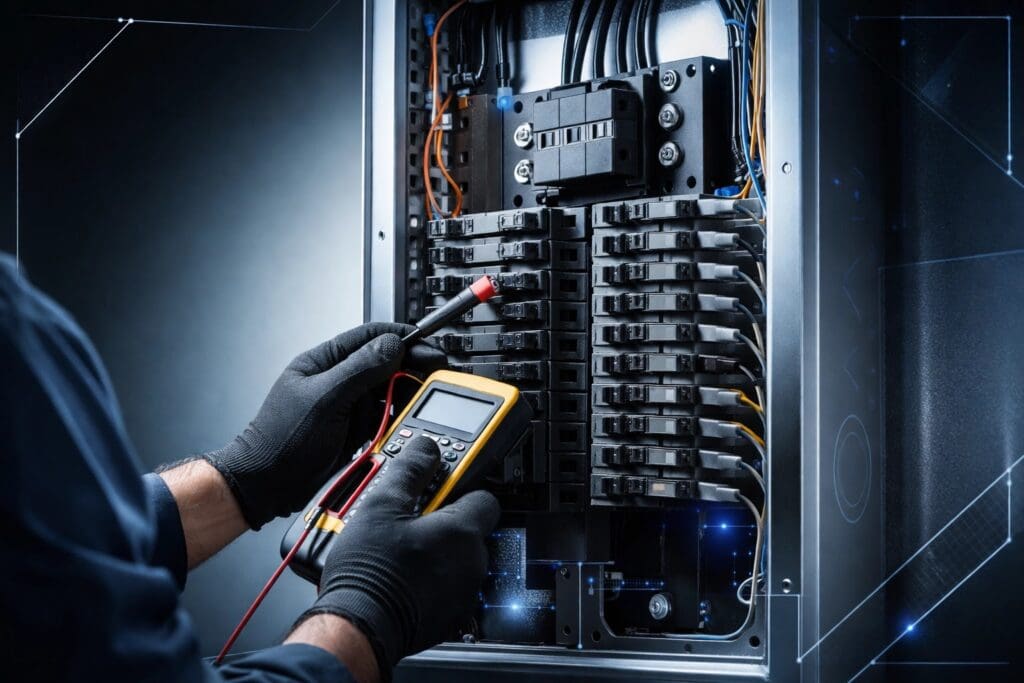
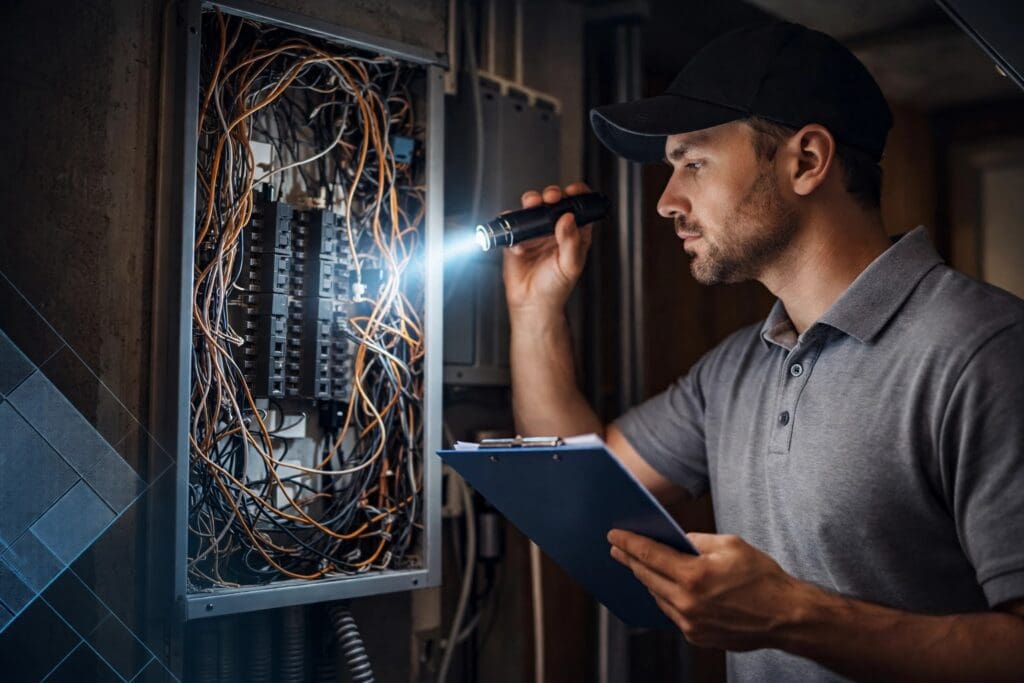
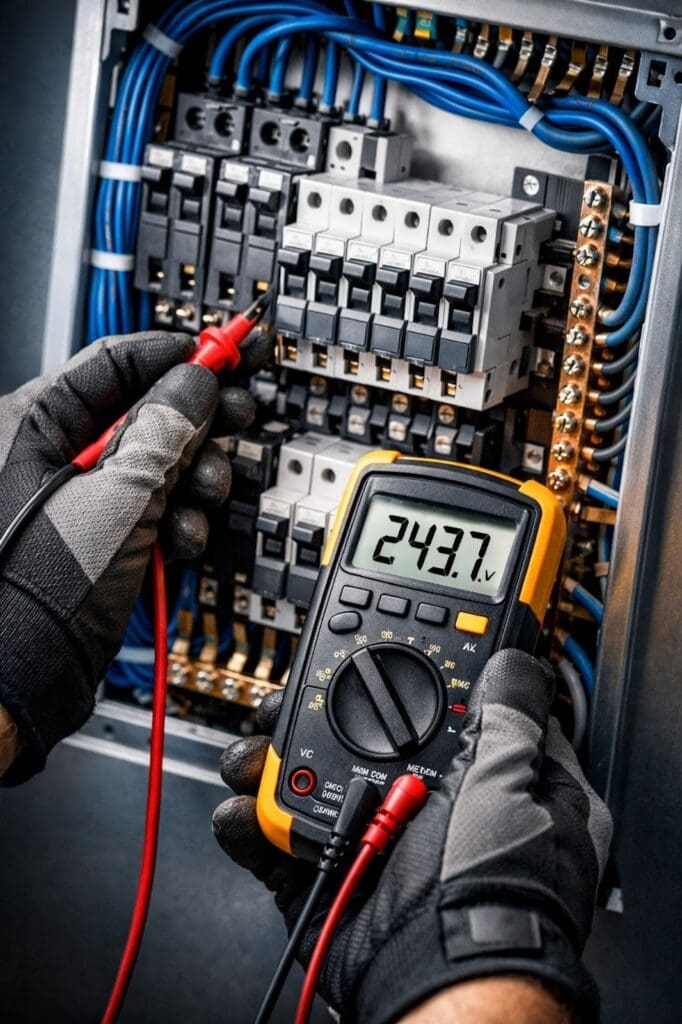
Electrician testing an open electrical panel with a multimeter

Many Dilworth and Plaza Midwood homes were built before GFCIs became standard. Adding protection improves safety, but the correct retrofit method depends on how the vintage circuits are wired.

AFCIs (Arc Fault Circuit Interrupters)

Arc faults cause electrical fires. AFCIs detect dangerous arcing and shut down the circuit before a fire can start.

Current code requires AFCIs in most living spaces. Your classic Charlotte home probably doesn’t have them.

Retrofitting these safety devices into older systems requires a deep understanding of vintage wiring architecture, like identifying shared neutrals, to ensure they protect your home without causing constant nuisance trips.

Vintage Charlotte homes frequently use multi-wire branch circuits with shared neutrals. Modern AFCI breakers can trip instantly until those circuits are traced and separated correctly.
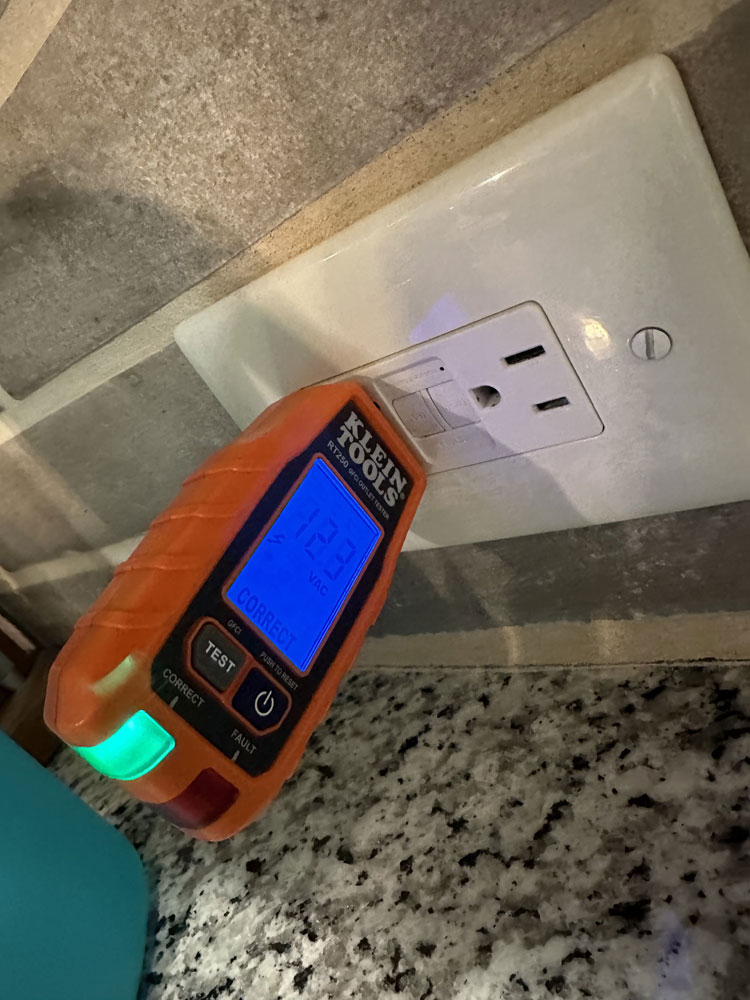
Outlet tester checking a receptacle in a Charlotte home

Charlotte’s Unique Infrastructure Challenges

Beyond what’s inside your home, Charlotte’s historic neighborhoods face external electrical challenges.

Many of these areas still use “backlot” infrastructure. Power lines and poles sit in customer backyards rather than along streets. This setup creates problems:

  • Trees that were small decades ago now tower over power lines
  • Vegetation-related outages happen frequently
  • Some areas still have exposed copper wires that spark when wind blows them together

These infrastructure issues contribute to the outages that plague some of Charlotte’s most desirable neighborhoods.

Property owners legally own the weatherhead, the service mast, which is the pipe attached to the house, and the meter box. Duke Energy maintains the high-voltage lines, not those house-mounted service components.

If a falling limb damages your service mast, getting reconnected isn’t instant. Pulling a county permit, passing inspection, and waiting for the utility to reconnect the lines can take 2 to 3 business days, especially over a weekend. We offer an emergency bridge solution. While we repair your mast, we can install a portable generator inlet and a code-compliant interlock kit on your panel. This allows you to safely plug in a portable generator and power your home’s critical systems immediately while we handle the permit and wait for the utility to restore the grid. Best of all, you keep the generator hookup for the next storm.

Warning Signs You Shouldn’t Ignore

Your home might be trying to tell you something. Watch for:

Flickering lights – Could indicate loose connections or overloaded circuits.

Outlets that don’t work – May signal wiring problems behind the walls.

Two-prong outlets – These lack grounding and can’t safely power modern electronics.

Warm outlets or switch plates – Heat indicates dangerous resistance in the wiring.

Burning or strange odors – Stop using that circuit immediately and call an electrician in Charlotte NC.

Frequently tripping breakers – Your system is telling you it’s overloaded.

Discolored outlets – Scorch marks mean arcing has occurred.

The Humidity Factor

Charlotte summers bring humidity. That moisture affects electrical systems in vintage homes.

Humidity can cause:

  • Corrosion in metal outlets and wiring
  • Increased electrical resistance
  • Heat buildup in connections
  • Accelerated deterioration of insulation

Loose outlets in humid conditions pose elevated fire risks. The combination of moisture and electrical resistance generates heat that can ignite surrounding materials.

What a Professional Inspection Covers

A thorough electrical inspection examines:

  1. Service entrance and meter – Condition and capacity
  2. Main panel – Brand, age, and safety
  3. Branch circuit wiring – Type and condition
  4. Outlets and switches – Grounding and functionality
  5. GFCI and AFCI protection – Presence and operation
  6. Visible wiring – In accessible areas like attics and basements
  7. Smoke detector circuits – Proper installation and function

The inspection identifies immediate hazards and helps prioritize upgrades.

Upgrades Worth Considering

Panel Upgrade

A 100-amp rating alone does not make an upgrade mandatory. Patterson runs the NEC Article 220 calculated demand load, evaluates the panel condition, and looks for smart options that can save the homeowner money before recommending 200 amps.

Whole-House Rewiring

Homes with pre-1940 knob-and-tube or 1965 to 1976 solid, single-strand aluminum branch circuits need a precise evaluation. Patterson can build a systematic room-by-room correction plan when complete rewiring is not the only safe path.

Additional Circuits

Adding dedicated circuits for high-demand appliances reduces strain on existing wiring. Consider dedicated circuits for:

  • Home office equipment
  • Kitchen appliances
  • HVAC systems
  • EV chargers

Speaking of EV chargers, check out our EV installation services if you’re making the switch to electric.

Generator Installation

Frequent outages in historic neighborhoods make backup power valuable. A properly installed generator keeps your household running when the grid doesn’t.

Protecting Your Investment

Your historic Charlotte home is likely your biggest investment. Proper electrical maintenance protects both the property and everyone in it.

Insurance companies increasingly scrutinize electrical systems in vintage homes. Outdated wiring can affect coverage and premiums. Proactive upgrades often pay for themselves.

Next Steps

Schedule an electrical inspection. Know what you’re working with. Prioritize upgrades based on safety risks.

Living in Plaza Midwood, Myers Park, Dilworth, or any of Charlotte’s classic neighborhoods doesn’t mean accepting electrical hazards. Modern solutions exist that preserve your home’s character while bringing safety up to current standards.

Patterson Contracting Services works with historic Charlotte homeowners every day. We understand these homes and their unique challenges.

Frequently Asked Questions

Why can a historic home’s electrical system struggle with modern use?

Older electrical infrastructure was designed for simpler demands, not today’s collection of HVAC equipment, appliances, electronics, and smart devices.

Which older wiring systems raise red flags?

Pre-1940 knob-and-tube, degraded ungrounded cloth-insulated NM cable, and 1965 to 1976 solid aluminum branch circuits each need a precise professional evaluation.

Which modern safety devices may be missing in a historic home?

GFCIs and AFCIs are safety devices that many historic homes lack.
You’re in the middle of making dinner. The microwave is running. The air fryer is doing its thing. You flip on the kitchen light and hear a click. Everything goes dark.

You head to the garage, find the electrical panel, flip the breaker back, and get on with your evening.

Sound familiar?

The short answer

A tripping breaker is not trying to ruin your night. It is cutting power when current exceeds safe levels so the wiring does not keep heating up.

Your Electrical Panel Isn’t the Problem. It’s the Solution.

Think of your circuit breaker like a bodyguard. Its entire job is to watch the electrical current flowing through your home and step in the moment something looks dangerous.

Inside each breaker is a mechanism that monitors electricity. When current exceeds safe levels, the breaker trips. It cuts power instantly. No hesitation.

This happens in a fraction of a second. Before wires overheat. Before insulation melts. Before a fire starts inside your walls where you can’t see it.

That annoying trip to the garage? That’s your electrical system doing exactly what it’s supposed to do.

The Three Main Reasons Breakers Trip

Not all trips are created equal. Understanding why your breaker tripped helps you know what to do next.

1. Overloaded Circuit

This is the most common culprit. An overload happens when you’re pulling more electricity through a circuit than it’s designed to handle.

Picture it like a highway. Your circuit has a certain number of lanes. Plug in too many devices, and you’ve got a traffic jam. The breaker trips to prevent the “road” (your wiring) from overheating.

Common scenarios:

  • Running multiple high-draw appliances on one circuit
  • Space heaters in winter
  • Window AC units in summer
  • Too many devices plugged into one outlet via power strips

The fix is usually simple. Spread your devices across different circuits. Or upgrade your electrical panel to handle modern power demands.

2. Short Circuit

This one is more serious.

A short circuit occurs when a hot wire touches a neutral wire. This creates a sudden surge of electricity with very little resistance. The result? A massive spike in current that generates heat almost instantly.

Short circuits can happen from:

  • Damaged or frayed wiring
  • Loose connections
  • Faulty appliances
  • Rodents chewing through wire insulation

If you reset a breaker and it trips immediately, you likely have a short circuit. Don’t keep resetting it. Call an electrician.

3. Ground Fault

Ground faults are similar to short circuits but involve the hot wire touching a ground wire or a grounded part of your system (like a metal outlet box).

These are especially dangerous in areas with moisture: bathrooms, kitchens, garages, outdoor spaces. Water increases conductivity, which increases the risk of electrical shock.

Under the 2020 National Electrical Code (NEC) cycle, GFCI protection is required in these areas. It detects ground faults and cuts power in milliseconds. Your main breaker panel remains a backup line of defense.

Frayed electrical wires with exposed copper

The Danger of the “Just Reset It” Approach

Here’s where things get risky.

Many homeowners treat a tripped breaker like a minor inconvenience. Flip it back. Move on. Problem solved.

But if your breaker keeps tripping, that’s not a faulty breaker. That’s your electrical system waving a red flag.

Repeatedly resetting a tripping breaker without addressing the cause is dangerous. Here’s why:

Wires overheat. Each time you force current through a compromised circuit, you’re pushing wires closer to their limit. Insulation can melt. Connections can loosen. Heat builds up inside your walls.

Fire risk increases. Electrical fires often start where you can’t see them: inside walls, in attics, behind outlets. By the time you notice, it’s too late.

The breaker itself can fail. Breakers wear out over time, especially when they’re tripping repeatedly. A worn breaker may eventually fail to trip when it should. That’s when real damage happens.

You could get shocked. If there’s a ground fault or short circuit and you keep resetting the breaker, you’re exposing yourself (and your family) to shock hazards every time you use that circuit.

Hand resetting a circuit breaker in an electrical panel

Signs You Need Professional Help

Some situations call for a licensed electrician. Don’t ignore these warning signs:

  • A breaker trips repeatedly, even after you’ve reduced the load
  • You smell burning or notice a burnt odor near the panel
  • The breaker feels hot to the touch
  • You see scorch marks or discoloration on the panel
  • The breaker won’t stay in the “on” position
  • Lights flicker throughout your home
  • You hear buzzing or crackling sounds from the panel

Any of these symptoms indicate a problem that goes beyond a simple overload. You need someone who can diagnose the root cause and fix it safely.

What Happens During an Electrical Panel Inspection

When you call for electrical panel service in Charlotte NC, here’s what a professional will typically do:

  1. Visual inspection. Check for obvious signs of damage, corrosion, or improper wiring.
  2. Load analysis. Determine if your panel is handling more than it’s rated for.
  3. Breaker testing. Verify that each breaker trips properly and isn’t worn out.
  4. Connection check. Tighten loose terminals and look for signs of arcing.
  5. Code compliance review. Make sure your panel meets current electrical codes.

If your panel is outdated, unsafe, or undersized for the NEC Article 220 calculated demand load, the electrician may recommend an upgrade. A 100-amp rating by itself never makes that upgrade automatic; Patterson looks for safe, smart options that can save the homeowner money.

Older Panels Need Extra Attention

If your home was built before the 1990s, your electrical panel might be due for a closer look.

Some older panels have known safety issues. Federal Pacific and Zinsco panels, for example, have documented failure rates. Breakers in these panels may not trip when they should, leaving your home unprotected.

Even if your panel brand isn’t on the “problem list,” age matters. Components degrade. Connections loosen. Technology improves. A panel inspection every few years is a smart move for any Charlotte homeowner.

The Bottom Line

Your circuit breaker isn’t your enemy. It’s one of the most important safety devices in your home. Every trip is a message: something needs attention.

Listen to it.

Don’t just reset and forget. If your breaker keeps tripping, find out why. Reduce the load. Check for damaged appliances. And if the problem persists, call a professional.

Ignoring a tripping breaker doesn’t make the problem go away. It just lets the problem grow until it becomes something much worse.

Need an Electrician in Charlotte NC?

If your breaker keeps tripping or your panel is showing signs of wear, Patterson Contracting Services can help. We offer electrical panel troubleshooting and service for homeowners throughout the Charlotte area.

No scare tactics. No upselling. Just honest answers and safe solutions.

Frequently Asked Questions

Why does a circuit breaker trip?

A breaker trips when current exceeds safe levels. Cutting power is the electrical system doing its job.

What are the three main reasons breakers trip?

Overloaded circuits, short circuits, and ground faults are the three main reasons breakers trip.

Should a breaker that trips immediately be reset again?

No. An immediate repeat trip can point to a short circuit. Do not keep resetting it; call an electrician.

Electric vehicles are everywhere in Charlotte. Drive through Dilworth, South End, or Ballantyne and you’ll spot Teslas, Rivians, and Mustang Mach-Es at every turn. The Queen City has embraced the EV revolution.

The short answer

A standard outlet can charge an EV, but many Charlotte homeowners want faster charging. That can require a dedicated circuit, a panel evaluation, and professional installation.

Plugging into a standard outlet works. Slowly. Very slowly. Most Charlotte homeowners want faster charging. That means electrical upgrades. Panel service. Dedicated circuits. The stuff that keeps your charger running smoothly without tripping breakers or causing problems.

Let’s break down what you need to know about EV charger installation in Charlotte, NC.

Duke Energy Can Offset the Installation Cost

Patterson is a Duke Energy trade ally and handles the local permitting and program-ready documentation.

Even better: installing your charger might cost a lot less than you think. Duke Energy currently offers a Charger Prep Credit of up to $1,133 for Charlotte-area homeowners to cover the actual electrical prep work, including the wiring, conduit, breaker, and labor. But there is a catch: Duke is incredibly strict about the paperwork. To get your reimbursement, you need a finalized permit and an invoice that perfectly itemizes labor, materials, and permitting costs on separate lines. At Patterson Contracting Services, we know exactly what Duke Energy requires. We structure our invoices specifically for this program and handle the local permitting, handing you exactly what you need to upload and claim your money.

Duke Energy Carolinas’ Flex Savings Option (FSO) rate plan lets EV owners charge overnight for roughly 7 cents per kWh while avoiding the punitive demand charges of older time-of-use plans.

Level 1 vs. Level 2: Understanding Your Charging Options

Two main options exist for home charging.

Level 1 Charging uses a standard 120-volt household outlet. It comes with your vehicle. No installation required.

The catch? It’s slow. Expect 3-5 miles of range per hour of charging. For a fully depleted battery, you’re looking at 24-48 hours to reach full charge.

That works for plug-in hybrids with small batteries. For full EVs with 250-300 mile range? Not practical for most Charlotte drivers.

Level 2 Charging uses a 240-volt connection. Same voltage as your dryer or oven. This delivers 25-30 miles of range per hour. A full charge overnight becomes realistic.

Level 2 is what most EV owners want. It’s also where electrical requirements get serious.

What Your Home Needs for Level 2 Charging

Level 2 chargers require specific electrical infrastructure. Here’s the checklist:

Dedicated Circuit

Your EV charger needs its own circuit. EV charging is a continuous load, so the circuit is sized at 125% of the charger’s actual draw. If you want a charger that delivers 48 amps of power to your car, we have to install a 60-amp breaker and size the copper wire to match.

Running this circuit from your panel to your garage or driveway requires professional installation. Wire gauge, breaker size, and distance all factor into the equation.

Adequate Panel Capacity

This is where many Charlotte homeowners hit a wall.

Most homes have 100-amp or 200-amp service, but the rating alone does not decide whether an upgrade is needed. Patterson applies code-approved demand factors from NEC Article 220 to find the home’s real calculated baseline, called the calculated demand load. That math reflects how a home actually uses power instead of pretending every appliance runs at full output at the same time.

The calculation tells Patterson whether the existing service has room, a code-compliant Energy Management System can create a smart path, or a panel upgrade is genuinely necessary.

Proper Location and Wiring

Where do you park your EV? Garage? Driveway? Street?

The distance between your panel and charging location matters. Longer runs require heavier gauge wire. Outdoor installations need weatherproof equipment and proper mounting.

Signs Your Panel Needs an Upgrade

Not sure if your home can handle an EV charger? Look for these indicators:

  • A 100-amp panel without a documented NEC Article 220 calculated demand load
  • Breakers trip frequently
  • You’ve added major appliances recently
  • Your home is older with original electrical
  • Panel has no open slots for new breakers

A residential electrician in Charlotte, NC can assess your system and determine what’s needed.

The Panel Upgrade Process

If your home needs more capacity, here’s what to expect:

Assessment

A licensed electrician evaluates your current system. They’ll calculate existing loads, review your panel’s condition, and determine the right upgrade path.

Permitting

Charlotte requires permits for electrical panel upgrades. Your electrician handles this paperwork. Inspections ensure the work meets code.

Installation

The utility company may need to disconnect power temporarily. Your electrician installs the new panel, transfers existing circuits, and adds capacity for your EV charger.

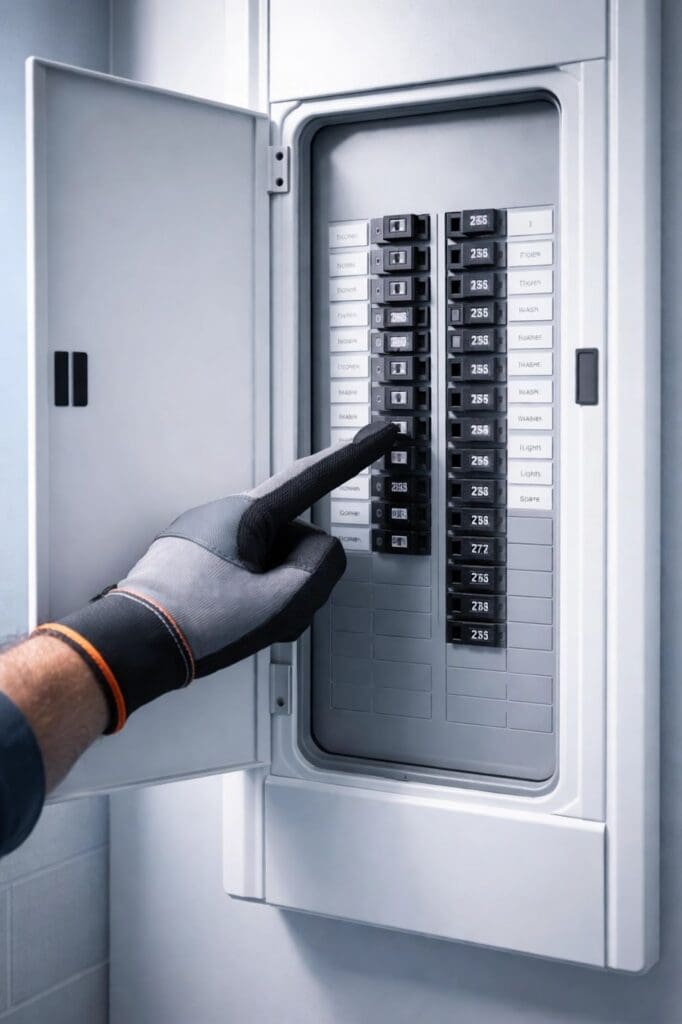
Gloved electrician pointing to an open electrical panel

Final Inspection

The city inspector verifies everything meets code. Once approved, you’re ready for your charger installation.

Most electrical panel service in Charlotte, NC takes 1-2 days for the actual work. Permitting and scheduling add to the timeline.

Choosing the Right EV Charger

Chargers vary in power output, features, and price. Consider these factors:

Power Output

  • 32-amp chargers: Good for most EVs, adds 25 miles of range per hour
  • 48-amp chargers: Faster charging, adds 30-35 miles per hour
  • 80-amp chargers: Maximum speed for high-capacity vehicles

Match your charger to your vehicle’s onboard charger capacity. No point paying for 80 amps if your car maxes out at 32.

Smart Features

Many modern chargers offer WiFi connectivity. Schedule charging during off-peak hours. Monitor energy usage. Receive notifications when charging completes.

Code-compliant load-management options include the Emporia EV Charger with Vue energy monitor, Wallbox Pulsar Plus with a power meter, and Tesla Wall Connector with dynamic power management.

While an Energy Management System is a brilliant alternative to a full service upgrade, it does add hardware and labor costs, requires extra equipment, and takes up a noticeable amount of physical wall space next to your main panel.

Hardwired vs. Plug-In

Hardwired installations connect directly to your electrical system. More permanent. Cleaner look.

Plug-in units use a NEMA 14-50 outlet (same as RV plugs). Portable if you move. Easier to replace the charger later.

Under NEC 2020 Article 625.54, a plug-in EV outlet requires a specialized GFCI circuit breaker. Hardwiring bypasses that outlet requirement, reduces nuisance trips, and creates a more reliable connection.

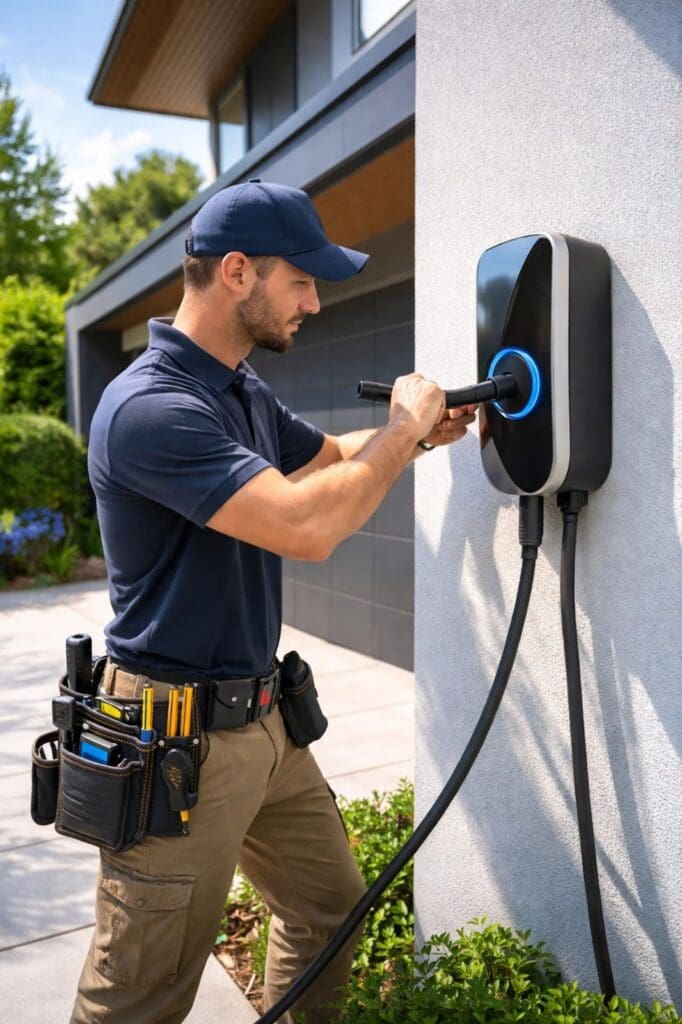
Electrician installing a wall-mounted EV charger outside a home

Common Installation Mistakes to Avoid

DIY electrical work causes problems. Here’s what goes wrong when homeowners cut corners:

Undersized Wiring

Using wire that’s too small creates heat buildup. Fire hazard. Code violation. Failed inspection.

Improper Breaker Sizing

Breakers protect wiring from overload. Wrong size means inadequate protection or nuisance tripping.

No Dedicated Circuit

Sharing circuits with other loads causes problems. Tripped breakers. Slow charging. Potential damage to the charger.

Skipping Permits

Unpermitted work creates issues when selling your home. Insurance complications if something goes wrong. Potential code violations.

Outdoor Installation Without Proper Protection

Rain, humidity, and temperature swings damage improperly installed equipment. Weatherproof enclosures and proper mounting matter.

Why Professional Installation Matters

EV chargers draw significant power continuously. The connection between your panel and charger handles thousands of charging cycles over its lifetime.

Professional installation ensures:

  • Proper wire sizing for the distance and load
  • Correct breaker selection and installation
  • Code-compliant work that passes inspection
  • Safe, reliable operation for years

The upfront cost of professional installation pays off in safety and reliability.

Getting Started

Ready to charge your EV at home? Here’s the process:

  1. Schedule an assessment – A licensed electrician evaluates your panel and determines requirements
  2. Get a quote – Understand costs for any needed upgrades plus charger installation
  3. Choose your charger – Select based on your vehicle and charging needs
  4. Schedule installation – Permitting, installation, and inspection
  5. Start charging – Wake up every morning with a full battery

Patterson Contracting Services handles EV charger installations throughout the Charlotte area. Panel upgrades. Dedicated circuits. Complete turnkey installation.

Your EV is ready. Let’s make sure your home is too.

Frequently Asked Questions

What are the two main home EV charging options?

Level 1 charging uses a standard 120-volt outlet. Level 2 charging uses a 240-volt connection.

What does a Level 2 charger need?

A Level 2 charger needs a dedicated circuit, adequate panel capacity, and wiring and equipment suited to the charger’s location.

What signs suggest the panel needs a professional review?

A 100-amp rating alone does not require an upgrade. A professional review should combine the NEC Article 220 calculated demand load with panel condition, breaker trips, major appliance additions, and available space.

You found the house. Made an offer. Got it accepted.

Then the home inspection report came back. And there it is, a whole section on electrical issues. Words like “double-tapped breaker,” “open splice,” and “recommend evaluation by licensed electrician.”

Welcome to the handyman special.

Here in Charlotte, we see this all the time. Homes where a previous owner (or their “guy who knows electrical”) did some DIY wiring. It worked. The lights turned on. Nobody got shocked.

The short answer

Electrical work can appear to function and still fail an inspection. Those flags point to wiring or panel work that a licensed electrician should evaluate and correct.

Let’s break down what those inspection flags actually mean, and how a residential electrician in Charlotte NC fixes them the right way.

Electrician inspecting tangled wiring in an open electrical panel

What Is a “Handyman Special” Anyway?

Real estate agents use this term for homes that need work. Fixer-uppers. Diamonds in the rough.

But electricians use it differently.

To us, a handyman special is a house where someone who wasn’t a licensed electrician made electrical modifications. Could be the homeowner. Could be a general contractor. Could be the neighbor who “used to do this stuff.”.

The work might look fine on the surface. But behind the walls and inside the panel? That’s where the problems hide.

Home inspectors are trained to find these issues. They use polarity testers, check junction boxes, and open up panels. When they find something wrong, they flag it.

And those flags end up on your report.

The Most Common Electrical Red Flags (And What They Mean)

Here’s what we see most often when Charlotte homeowners call us after getting their inspection reports back.

Double-Tapped Breakers

This is the big one. Shows up on reports constantly.

A double-tapped breaker means two wires are connected to a single breaker that’s only designed for one wire. Someone needed to add a circuit, didn’t want to add a new breaker, and just jammed another wire in there.

The problem: loose connections. Arcing. Heat buildup. Fire risk.

Most breakers aren’t rated for two wires. When you force it, the connection isn’t secure. Over time, it loosens. Sparks happen. Bad things follow.

The fix: Install proper breakers or add a tandem breaker if the panel allows it. Sometimes the panel needs an upgrade entirely.

Open Splices

Electrical connections need to be inside junction boxes. Always. No exceptions.

An open splice is a wire connection that’s just hanging out in an attic, behind drywall, wherever. Maybe wrapped in electrical tape. Maybe not even that.

This is a fire hazard. Full stop.

The fix: Locate all open splices, install proper junction boxes, and make secure connections with wire nuts. Every single one.

Reversed Polarity

When you wire an outlet, the hot wire goes to one terminal and the neutral goes to another. Simple.

But DIYers get this backwards more often than you’d think. The outlet still works. Lamps turn on. But the polarity is reversed, and that creates a shock hazard.

Inspectors catch this with a simple plug-in tester. Three lights tell them exactly what’s wrong.

The fix: Rewire the affected outlets correctly. Takes a few minutes per outlet when you know what you’re doing.

Ungrounded Receptacles

Older Charlotte homes often have two-prong outlets. That’s expected.

What’s not expected: three-prong outlets that aren’t actually grounded. Someone swapped the outlet but never ran a ground wire. Now it looks modern but isn’t any safer.

Without a ground, electricity has nowhere to go during a fault. That means it goes through whatever’s nearby. Could be your appliance. Could be you.

The fix depends on the existing wiring and what the 2020 National Electrical Code (NEC) cycle permits: run a proper equipment grounding conductor or install correctly labeled GFCI protection.

Unbonded Electrical Panel

This one sounds technical. Here’s the simple version.

Your electrical panel has a neutral bus bar. It needs to be bonded (connected) to the panel enclosure with a specific screw. This gives fault current a safe path back to the source.

When handyman electricians install panels, they sometimes forget this step. Or they don’t know it exists.

The fix: Install the bonding screw. Takes about two minutes, if you know where it goes.

Loose or Disconnected Ground Wires

Sometimes the ground wire is there. It’s just not connected.

We open up outlets and find ground wires tucked in the back of the box, not attached to anything. The outlet tests as ungrounded even though the wire exists.

The fix: Connect the ground wire to the outlet’s ground terminal. Simple repair, but it needs to be done at every affected outlet.

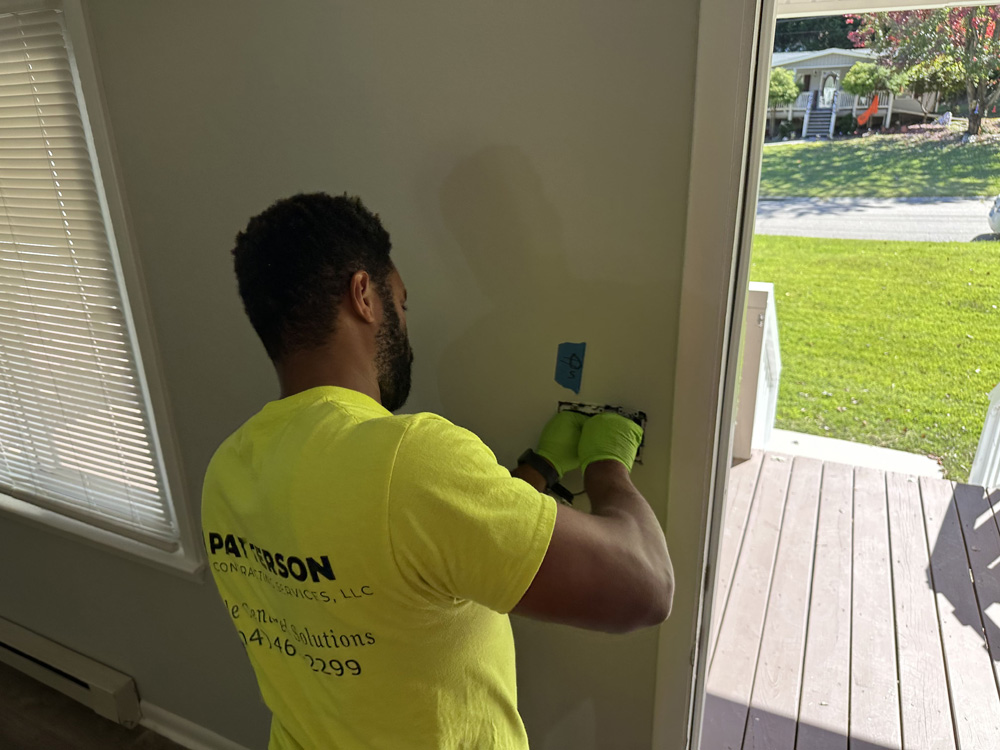
Patterson electrician working on a wall receptacle in a Charlotte home

Why Does DIY Electrical Work Fail Inspection?

Three reasons.

No permits. When licensed electricians do work, we pull permits. The city inspects the work. It gets signed off. There’s a paper trail proving it was done to code.

DIY work skips all that. No permit means no inspection. No inspection means no verification. Home inspectors see unpermitted work and flag it automatically.

No training. Electrical code exists for a reason. It’s based on decades of fire investigations, shock incidents, and engineering research. Licensed electricians study this. We pass exams on it. We keep up with code changes.

YouTube doesn’t cover all that. Neither does “common sense.”

No accountability. When we do work, our license is on the line. We carry insurance. If something goes wrong, there’s recourse.

When your buddy does it for a case of beer? There’s nothing. If it causes a fire five years later, that’s on you.

The Real Cost of Ignoring These Issues

Some buyers see electrical flags and think “I’ll deal with it later.”

Here’s what that actually looks like:

Insurance problems. Some carriers won’t insure homes with known electrical defects. Others will, but they’ll exclude electrical fires from coverage. Read your policy carefully.

Resale headaches. Whatever you ignore now, the next buyer’s inspector will find. You’ll either fix it then or negotiate a lower price.

Safety risks. Electrical fires kill people. Shocks kill people. This isn’t about passing inspection. It’s about keeping your family safe in the house you’re buying.

Higher repair costs. Small problems become big problems. A double-tapped breaker today could mean a panel replacement in five years when the damage spreads.

Fix it now. Fix it right. Move on.

How We Fix It For Real

At Patterson Contracting Services, we handle inspection report repairs every week. Here’s our process.

Step one: Review your report. Send us the electrical section. We’ll tell you exactly what each item means and what it takes to fix.

Step two: On-site evaluation. We come out and look at everything in person. Sometimes inspectors miss things. Sometimes they flag things that aren’t actually problems. We give you the full picture.

Step three: Provide options. Some repairs are straightforward. Others have multiple solutions at different price points. We explain your choices clearly.

Step four: Do the work. Our licensed electricians make repairs to current code. We pull permits when required. We do it right.

Step five: Documentation. You get paperwork showing what was done. This satisfies your lender, your insurance company, and your peace of mind.

No shortcuts. No “good enough.” Just proper electrical work from a residential electrician in Charlotte NC who does this every day.

Got Flags on Your Inspection Report?

Don’t panic. Don’t try to fix it yourself. Don’t let it kill your deal.

Frequently Asked Questions

What does “handyman special” mean in this article?

It means a home where someone who was not a licensed electrician made electrical modifications. The work can look fine on the surface while problems remain behind walls or inside the panel.

What is a double-tapped breaker?

A double-tapped breaker has two wires connected to one breaker that is designed for a single wire. That can create a loose connection, arcing, and heat buildup.

Why do home inspectors flag open splices?

Electrical connections need to be inside junction boxes. An open splice leaves a wire connection exposed in an attic, behind drywall, or another unprotected location.

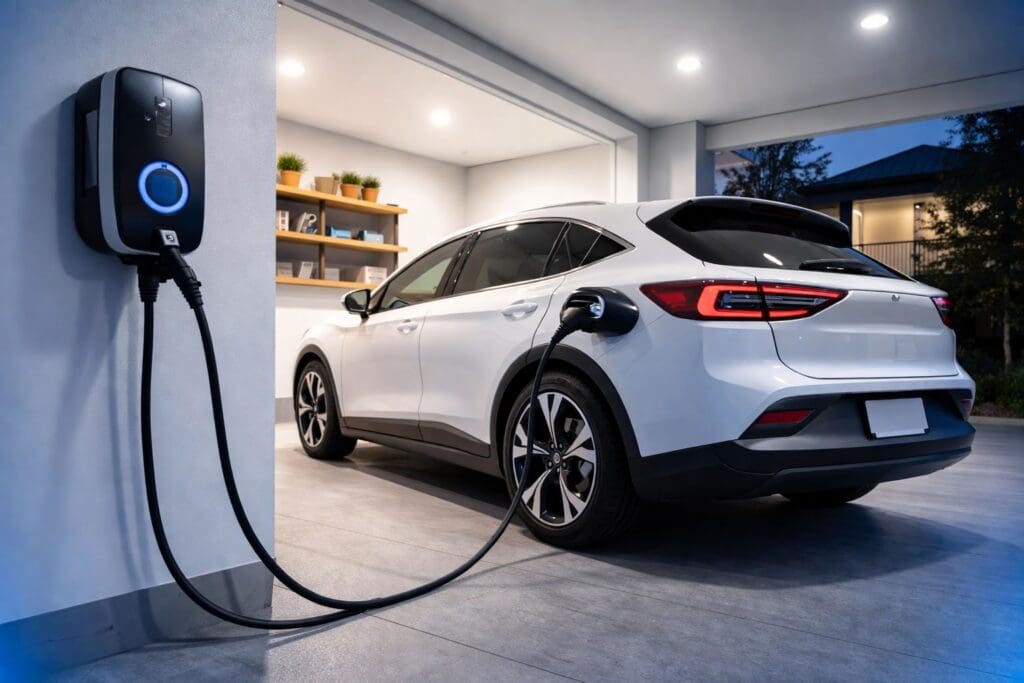
Wall-mounted EV charger beside a white electric vehicle in a garage

You just bought an electric vehicle. Congratulations! Now you’re looking at that wall in your garage and thinking, “How hard can it be to install a charger?”

You’ve watched three YouTube videos. The guy in the tutorial made it look simple. Just mount the unit, run some wire, connect a few things, and you’re done. Maybe you’ll save a thousand bucks doing it yourself.

The short answer

Here's the reality: EV charger installation is not a DIY project. The work must follow the adopted state code and local requirements in force for the project.

Duke Energy Can Offset the Installation Cost

Patterson is a Duke Energy trade ally and handles the local permitting and program-ready documentation.

Even better: installing your charger might cost a lot less than you think. Duke Energy currently offers a Charger Prep Credit of up to $1,133 for Charlotte-area homeowners to cover the actual electrical prep work, including the wiring, conduit, breaker, and labor. But there is a catch: Duke is incredibly strict about the paperwork. To get your reimbursement, you need a finalized permit and an invoice that perfectly itemizes labor, materials, and permitting costs on separate lines. At Patterson Contracting Services, we know exactly what Duke Energy requires. We structure our invoices specifically for this program and handle the local permitting, handing you exactly what you need to upload and claim your money.

Duke Energy Carolinas’ Flex Savings Option (FSO) rate plan lets EV owners charge overnight for roughly 7 cents per kWh while avoiding the punitive demand charges of older time-of-use plans.

Let me explain why that YouTube tutorial might end up costing you way more than you’d ever save.

What Makes EV Charger Installation Different

Installing an EV charger is not like replacing a light fixture or swapping out an outlet. EV charging is a continuous load, so the circuit is sized at 125% of the charger’s actual draw. If you want a charger that delivers 48 amps of power to your car, we have to install a 60-amp breaker and size the copper wire to match.

To put that in perspective, that’s the same power demand as your entire electric dryer or oven. Except your EV charger will run for 4-8 hours every single night.

Most garage circuits are 120-volt, 15-amp circuits designed for basic tools and lighting. They cannot carry a Level 2 charger. The project needs correctly sized wiring, a breaker, grounding, and a calculated demand load review. A 100-amp service does not automatically require an upgrade.

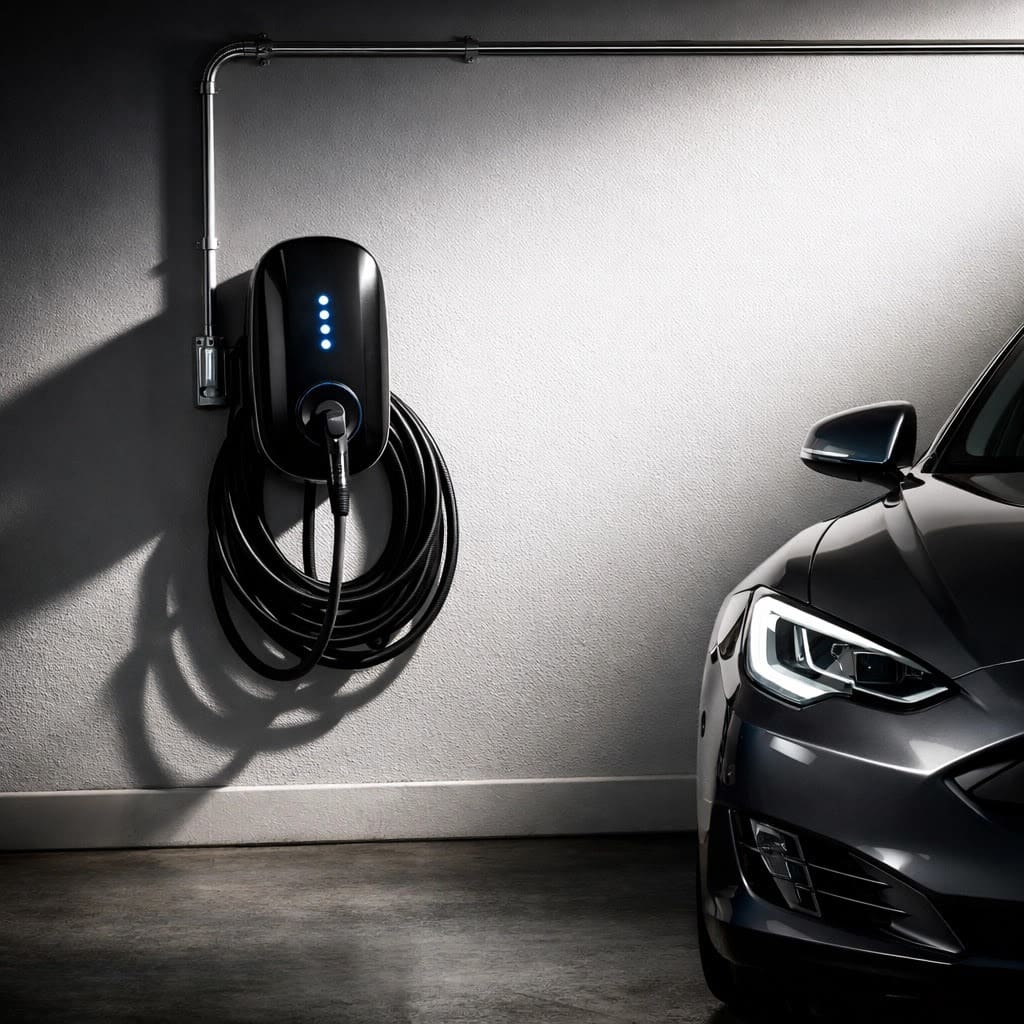
Wall-mounted EV charger and cable beside an electric vehicle

This isn’t cosmetic work. This is serious electrical infrastructure that has to meet strict safety codes and pass professional inspection.

Which Electrical Code Applies in North Carolina

Patterson uses the 2020 National Electrical Code (NEC) cycle as the active regulatory framework, together with adopted state and local requirements.

Continuous-load sizing. EV charging is a continuous load, so the circuit is sized at 125% of the charger’s actual draw. If you want a charger that delivers 48 amps of power to your car, we have to install a 60-amp breaker and size the copper wire to match.

Load calculation and listed equipment. Patterson applies code-approved demand factors from NEC Article 220 to find the home’s real calculated baseline, called the calculated demand load. That math reflects how a home actually uses power instead of pretending every appliance runs at full output at the same time. The installation also requires listed equipment, proper grounding and bonding, required protection, and any disconnecting means that apply.

A licensed electrician works from the adopted North Carolina code, state amendments, local inspection requirements, and the charger’s instructions. A video labeled for a newer national edition may not match what Charlotte and Mecklenburg County enforce.

Electrician testing an electrical panel with a multimeter

Charlotte and Mecklenburg County Permit Requirements

Here’s where things get really complicated for DIY enthusiasts. In Charlotte and throughout Mecklenburg County, EV charger installations require permits and inspections.

You can’t just install the charger and start using it. The process works like this:

A licensed electrical contractor pulls the permit. Not you. Charlotte requires permits to be pulled by licensed professionals because they’re legally responsible for the work meeting code requirements.

The work gets completed following approved plans. Inspectors know what to look for. They check wire sizing, breaker ratings, grounding, clearances, proper conduit installation, and dozens of other details.

An electrical inspector examines and approves the installation before you can legally use it. If the work doesn’t meet code, you fail inspection and have to fix everything before trying again.

The permit gets closed out with all documentation filed. This matters when you sell your home, which we’ll get to in a minute.

What happens if you skip the permit?

First, it’s illegal. Installing unpermitted electrical work is a violation of local ordinances.

Second, Duke Energy might refuse to provide service. Utility companies can require proof of permitted, inspected electrical work before connecting power to new circuits.

Third, you create a liability nightmare if something goes wrong. More on that in a moment.

The Real Safety Risks

Let’s talk about what can go wrong with an improperly installed EV charger.

Electrical fires. According to the National Fire Protection Association, electrical failures or malfunctions are involved in an estimated 13% of home structure fires. An undersized wire, improper connection, or overloaded circuit creates heat. Heat degrades insulation. Degraded insulation causes arcing. Arcing starts fires.

Your EV charger will pull heavy current for hours every night. Any installation error gets worse over time as connections heat up, cool down, heat up again, causing expansion and contraction that loosens connections.

Electrocution hazards. A 240-volt circuit has serious power. If the charger isn’t properly grounded, if the installation has a ground fault, or if moisture intrudes into an improperly sealed connection, someone could be seriously injured or killed.

Damage to your vehicle. Modern EVs have battery management systems that expect consistent, properly installed power. Improper voltage, inconsistent power delivery, or electrical noise from a poor installation can create problems beyond the wall-mounted charger.

Property damage. I’ve seen DIY electrical work destroy circuit boards in refrigerators, HVAC systems, and home electronics when voltage fluctuations or power surges propagate through the home’s electrical system.

These aren’t hypothetical scenarios. These are real consequences of improper electrical work performed by people who thought they knew what they were doing.

Your Car Warranty and Home Insurance

Here’s something the YouTube videos don’t mention: improper installation can void your EV warranty.

Most electric vehicle manufacturers explicitly require professional installation of home charging equipment. Read your owner’s manual. The warranty section probably includes language stating that damage caused by improper charging equipment installation isn’t covered.

If your DIY installation damages your vehicle’s charging system or battery, you’re paying for the repair out of pocket. That’s potentially tens of thousands of dollars.

Now let’s talk about home insurance.

Insurance companies don’t love unpermitted electrical work. If a fire or electrical problem originates from your unpermitted, DIY EV charger installation, your insurance company might deny the claim.

They’ll send an investigator. The investigator will discover the unpermitted work. Your claim gets denied. You’re paying for the damage yourself.

Even if you never have a fire, unpermitted work can come back to haunt you. When you sell your home, the buyer’s inspector might identify the unpermitted charger. Now you’re looking at:

  • Paying to have the work inspected and permitted retroactively
  • Paying to have a licensed electrician redo any work that doesn’t meet code
  • Dealing with a home sale delay or negotiation
  • Potentially facing a lower sale price or buyer backing out

That money you saved doing it yourself? It just cost you a lot more.

What Professional EV Charger Installation Actually Includes

When you hire a licensed electrician for EV charger installation in Charlotte NC, you’re getting a lot more than just someone mounting a box on your wall.

Load calculation and panel assessment. We apply NEC Article 220 demand factors and evaluate the condition of the existing service. Some homes have capacity, some benefit from an Energy Management System, and some genuinely need panel work.

Proper circuit design. We size the wire correctly, select the right breaker, ensure proper grounding, and design the circuit to meet the adopted North Carolina electrical code and local requirements.

Permit acquisition. We pull the permits, submit the required documentation, and coordinate with Mecklenburg County inspectors.

Professional installation. The charger gets mounted correctly, wiring gets run through proper conduit, connections are made to professional standards, and everything is tested before we turn it on.

Inspection and approval. We schedule the inspection, meet with the inspector, and ensure everything passes. If any issues arise, we correct them immediately.

Load management integration. Code-compliant options include the Emporia EV Charger with Vue energy monitor, Wallbox Pulsar Plus with a power meter, and Tesla Wall Connector with dynamic power management.

While an Energy Management System is a brilliant alternative to a full service upgrade, it does add hardware and labor costs, requires extra equipment, and takes up a noticeable amount of physical wall space next to your main panel.

Coordination with Duke Energy. If service upgrades are needed, we handle coordination with the utility company.

Manufacturer compliance. Our installation meets the charger manufacturer’s specifications, protecting your product warranty.

Documentation. You get copies of all permits, inspection approvals, and documentation for your records.

This isn’t about making things complicated for no reason. It’s about ensuring your EV charger installation is safe, legal, code-compliant, and warrantied.

The Hidden Costs of DIY

A straightforward professional EV charger installation generally starts at $900 to $1,200. The final scope still depends on the load calculation, panel condition, wire path, charger location, permitting, and the equipment selected.

DIY work can turn one professional visit into correction work, a permit problem, and another inspection. Patterson will install a manufacturer’s charger that the client purchased, but the company will not install customer-supplied wire, breakers, or returned big-box parts because the liability stays with the installer.

  • The GFCI breaker trap. Under NEC 2020 Article 625.54, plug-in EV outlets legally require a specialized, expensive GFCI circuit breaker. Amateur installers almost always fail inspection because they miss it. Hardwiring the charger completely bypasses this requirement, reducing nuisance trips and providing a more reliable connection.

A professional installation includes the load calculation, correctly sized circuit, permit, inspection, grounding and bonding, and work that follows the charger’s instructions. The useful comparison is not a made-up worst-case total. It is the cost of doing the job once versus paying to diagnose and redo work that was never documented.

What About Partial DIY?

Some people think they can meet halfway. “I’ll run the wire and mount the charger, then have an electrician connect it and get it inspected.”

That doesn’t work either.

First, Charlotte requires licensed electricians to perform the electrical work. “The electrical work” includes running the circuit, not just making the final connections.

Second, if you run the wire incorrectly, the electrician either has to redo it (costing you money and time) or refuse the job entirely because they can’t stamp work they didn’t perform.

Third, inspectors know what professional work looks like versus amateur work. If the inspector sees DIY installation during the inspection, they can fail it on that basis alone.

There’s no middle ground here. Either you’re doing permitted, professional installation, or you’re creating problems for yourself.

Yes, Really, Hire a Professional

I know DIY is popular. I know YouTube makes everything look achievable. I know you’re probably handy and have successfully tackled other home projects.

But EV charger installation is different. The stakes are higher. The complexity is greater. The legal requirements are stricter. And the consequences of mistakes are more severe.

You wouldn’t perform your own dental surgery after watching videos. You wouldn’t rewire your home’s main service panel. You wouldn’t install your own natural gas line.

EV charger installation falls into the same category: work that requires professional expertise, proper tools, current code knowledge, and legal authority to perform.

At Patterson Contracting Services, we’ve installed dozens of EV chargers across Charlotte. We know the local code requirements. We work with Mecklenburg County inspectors regularly. We coordinate with Duke Energy. And we stand behind our work with proper licensing, insurance, and warranties.

The investment in professional installation protects your vehicle, your home, your family, and your financial future. That’s worth more than the cost of a YouTube tutorial and some wire from the hardware store.

Your electric vehicle deserves a charging system that’s as advanced and safe as the car itself. Let’s make that happen the right way.

Frequently Asked Questions

Which electrical code applies to a Charlotte EV charger project?

Patterson uses the 2020 National Electrical Code (NEC) cycle as the active regulatory framework, together with adopted state and local requirements.

Does an EV charger installation require a permit and inspection?

Yes. EV charger installations in Charlotte and Mecklenburg County require permits and inspections.

Why is a Level 2 charger different from a standard garage circuit?

A Level 2 charger uses a dedicated 240-volt circuit and draws power continuously for hours. A basic 120-volt garage circuit is not designed for that load.

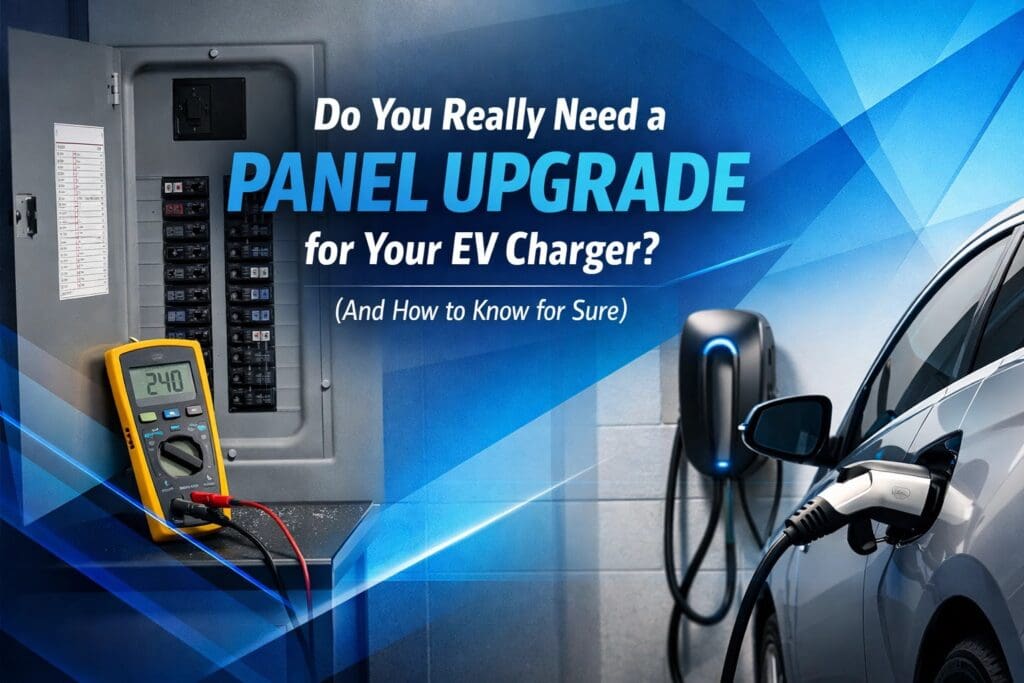
Panel upgrade for an EV charger article graphic

You just bought an electric vehicle. Smart move. Lower fuel costs, better for the environment, and you get to skip gas stations forever.

But now you need to charge it at home. And someone told you that means upgrading your electrical panel. That’s going to cost thousands, right?

The short answer

An EV charger does not automatically mean your home needs a panel upgrade. A load calculation shows how much capacity the house is using and whether the existing panel can support the charger.

Here’s what most Charlotte homeowners don’t realize: many Charlotte homes can support EV charging without a full panel upgrade. The problem is that many people get talked into expensive upgrades they don’t actually need.

Let me show you how to figure out what your home really needs.

Duke Energy Can Offset the Installation Cost

Patterson is a Duke Energy trade ally and handles the local permitting and program-ready documentation.

Even better: installing your charger might cost a lot less than you think. Duke Energy currently offers a Charger Prep Credit of up to $1,133 for Charlotte-area homeowners to cover the actual electrical prep work, including the wiring, conduit, breaker, and labor. But there is a catch: Duke is incredibly strict about the paperwork. To get your reimbursement, you need a finalized permit and an invoice that perfectly itemizes labor, materials, and permitting costs on separate lines. At Patterson Contracting Services, we know exactly what Duke Energy requires. We structure our invoices specifically for this program and handle the local permitting, handing you exactly what you need to upload and claim your money.

Duke Energy Carolinas’ Flex Savings Option (FSO) rate plan lets EV owners charge overnight for roughly 7 cents per kWh while avoiding the punitive demand charges of older time-of-use plans.

Understanding Your Electrical Panel

Your electrical panel is the heart of your home’s electrical system. It takes power from the utility company and distributes it to every circuit in your house.

Panels are rated by amperage. That number tells you how much total electrical current your home can handle at once.

200-amp panels are standard in newer Charlotte homes. If you bought or built in the last 20 years, you probably have one of these. Good news: you can almost certainly add an EV charger without upgrading.

100-amp panels were common from the 1960s through the 1990s. The rating alone never makes an upgrade automatic. Patterson uses the NEC Article 220 calculated demand load and smart options such as an Energy Management System to save clients money when the existing equipment is safe and serviceable.

60-amp panels show up in older Charlotte homes built before 1960. If you’ve got one of these, you’re definitely looking at an upgrade. Modern homes simply use too much power for a 60-amp panel to handle safely.

But here’s the thing: the number on your panel doesn’t tell the whole story. What matters is how much of that capacity you’re actually using.

Load Calculations: The Math That Matters

When a licensed electrician evaluates your home for EV charger installation in Charlotte NC, they should perform a load calculation.

This isn’t guesswork. It’s actual math based on the adopted state code and local requirements.

A proper load calculation accounts for:

  • Your home’s square footage
  • Major appliances (HVAC, water heater, stove, dryer)
  • Lighting and receptacles
  • Any other significant electrical loads
  • How much power your EV charger will draw

Patterson applies code-approved demand factors from NEC Article 220 to find the home’s real calculated baseline, called the calculated demand load. That math reflects how a home actually uses power instead of pretending every appliance runs at full output at the same time.

We compare that calculated baseline with the service rating and the charger’s actual draw before recommending an upgrade or an Energy Management System.

EV charging is a continuous load, so the circuit is sized at 125% of the charger’s actual draw. If you want a charger that delivers 48 amps of power to your car, we have to install a 60-amp breaker and size the copper wire to match.

Why Some Electricians Jump to “You Need an Upgrade”

Here’s an uncomfortable truth: doing a proper load calculation takes time and knowledge. It’s easier and faster to just say “you need a panel upgrade” than to sit down and run the numbers.

Some electricians recommend upgrades out of genuine caution. Liability concerns are real. If they underestimate your load and something goes wrong, they’re responsible.

Others recommend upgrades because panel replacement is profitable work. I’m not saying every electrician who recommends an upgrade is trying to upsell you. But you should understand that not all recommendations are based purely on technical necessity.

That’s why getting a second opinion matters. If someone tells you that you need a panel upgrade before you can charge your EV, ask them to show you the load calculation. Ask them what alternatives exist.

Because alternatives do exist.

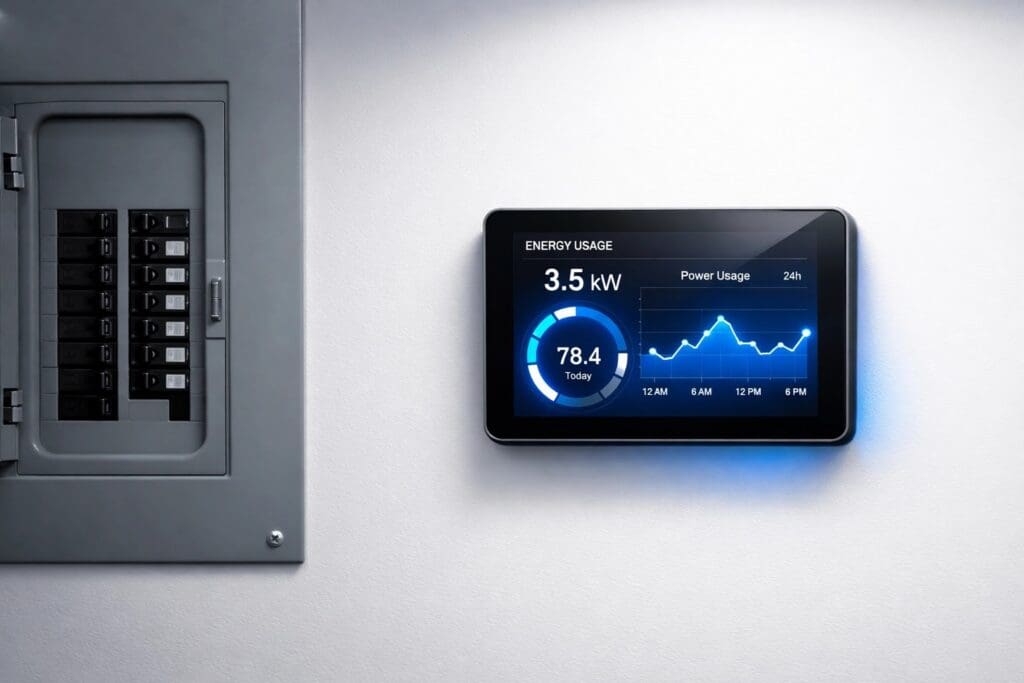
Electrical panel beside a wall-mounted energy monitor

Load Management Devices: The Smart Alternative

Load management systems have changed the game for EV charging in homes with limited panel capacity.

These devices monitor your home’s electrical usage in real-time. When your panel is approaching capacity, the system automatically reduces power to your EV charger.

Think of it like this: if you’re running your electric dryer, HVAC, and cooking dinner, the load management system might temporarily dial your EV charging down from 50 amps to 30 amps. When those other loads finish, charging ramps back up.

Your car still charges overnight. You just avoid overloading your panel.

Popular load management systems include:

  • Emporia EV Charger with Vue energy monitor
  • Wallbox Pulsar Plus with a power meter
  • Tesla Wall Connector with dynamic power management

While an Energy Management System is a brilliant alternative to a full service upgrade, it does add hardware and labor costs, requires extra equipment, and takes up a noticeable amount of physical wall space next to your main panel.

For many Charlotte homes with safe, serviceable 100-amp or 200-amp panels, an Energy Management System can be a smart alternative when the calculated demand load leaves limited charging capacity.

When You Actually Need a Panel Upgrade

Let’s be clear: sometimes you really do need an upgrade. Here’s when it’s non-negotiable:

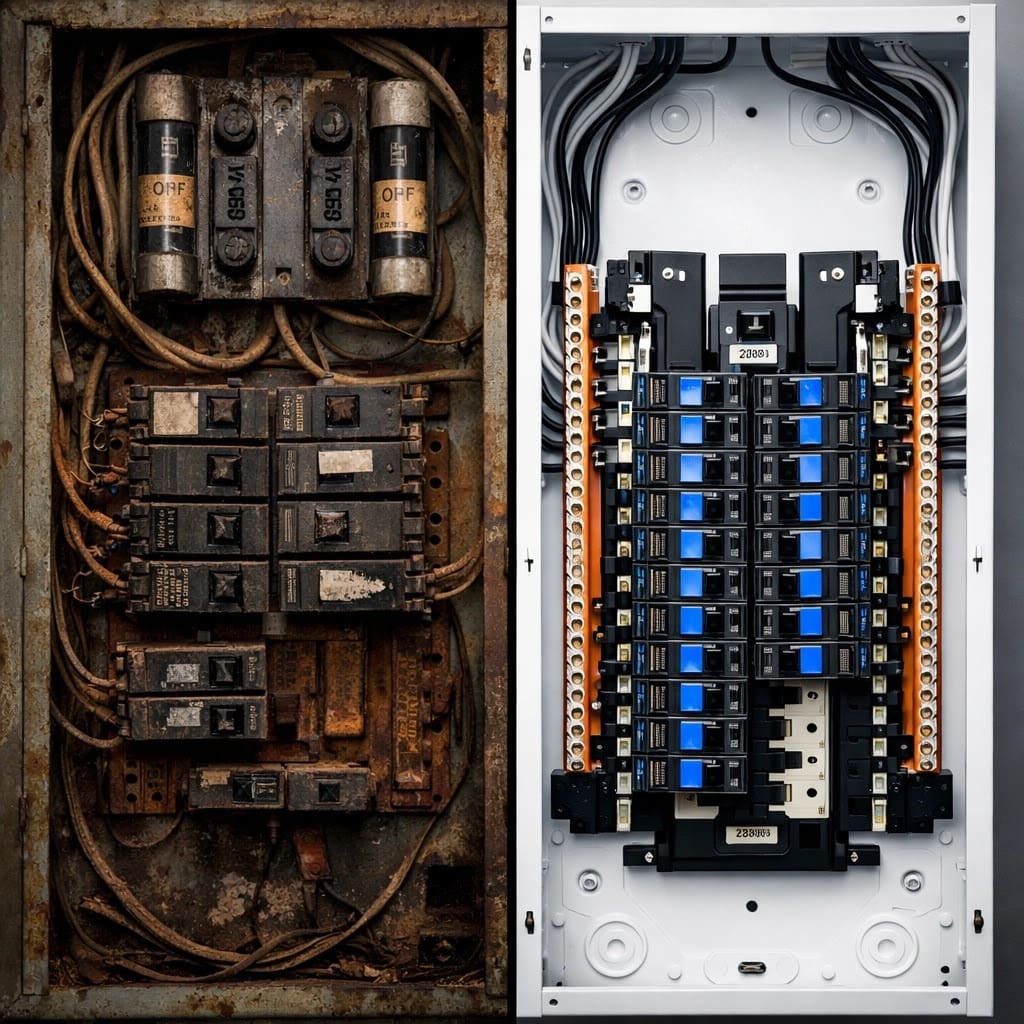
Your panel is recalled or dangerous. Federal Pacific and Zinsco panels are known fire hazards. If you have one, replace it immediately, EV charger or not.

Your panel is severely outdated. Panels from the 1950s through 1970s weren’t designed for modern electrical loads. They often have inadequate capacity and outdated safety features.

Your calculated demand load leaves no safe charging capacity. The NEC Article 220 calculation may point to an Energy Management System, a panel correction, or a service upgrade. Patterson shows the math before recommending the path.

You have a 60-amp panel. There’s just no way around this one. Modern homes need more capacity than a 60-amp panel can provide.

Side-by-side comparison of an old panel and a modern breaker panel

Your panel shows signs of problems. Frequent breaker trips, burning smells, humming sounds, hot panel doors, or flickering lights all indicate serious issues. Don’t add an EV charger. Get the panel addressed first.

When you need an upgrade for electrical panel service in Charlotte NC, it’s not optional. But when you need one, you really need one.

Charlotte-Specific Considerations

Charlotte’s housing stock is diverse, and that affects EV charging planning.

Older neighborhoods like Dilworth, Myers Park, and Elizabeth have homes built between 1920 and 1960. Many still have their original electrical systems. These homes often need significant electrical work before adding an EV charger. Panel upgrades are more common here.

Mid-century homes in areas like Eastover and South Charlotte often have 100-amp or early 200-amp panels. Patterson does not treat that rating as an automatic upgrade. The calculated demand load decides whether the home can use the existing service, an Energy Management System, or a full upgrade.

New construction in Ballantyne, Weddington, and surrounding areas comes with 200-amp panels as standard. These homes almost never need upgrades for EV charging.

Townhomes and condos present unique challenges. You might need HOA approval for EV charger installation. Shared electrical infrastructure can complicate things. And older townhome developments may have undersized panels.

Understanding your home’s age and electrical history helps set realistic expectations.

The Real Cost Comparison

Let’s talk numbers.

Basic EV charger installation with adequate panel capacity generally starts at $900 to $1,200. The wire path, charger location, and permitting can change the total.

Load management adds hardware plus configuration. It is priced for the home after the load calculation.

Installation requiring a panel upgrade includes panel installs that run $2,500 to $6,000, with this year’s average around $5,500. Complex jobs can reach $10,000.

The load calculation tells you which path your home actually needs, and the difference is substantial.

Questions to Ask Your Electrician

When you’re getting quotes for EV charger installation in Charlotte NC, ask these questions:

“Can you show me the load calculation?” A detailed calculation should break down your current usage and available capacity. If they can’t provide this, they’re guessing.

“What’s my panel currently rated for and what am I using?” You need both numbers to understand your situation.

“Have you considered load management as an alternative to a full upgrade?” If they say no or don’t know what you’re talking about, get a second opinion.

“What rebates or incentives are available?” A knowledgeable electrician should know about current Duke Energy programs and federal tax credits.

“Can I see examples of similar installations you’ve done?” Experience matters, especially with newer technologies like load management systems.

These questions help you separate thorough professionals from those who default to “just upgrade the panel.”

Making the Right Decision for Your Home

Here’s my recommendation: start with a proper assessment.

A licensed electrician should visit your home, examine your panel, review your electrical usage, and run a load calculation. That assessment tells you exactly what you’re working with.

If you have available capacity, great. Install the charger and be done.

If you’re close to capacity but your panel is in good condition, explore load management options first. They’re usually more cost-effective than a full upgrade.

If your panel is outdated, dangerous, or genuinely maxed out, then yes, upgrade it. But make that decision based on facts, not assumptions.

At Patterson Contracting Services, we start every EV installation project with a thorough assessment. We show you the numbers. We explain your options. And we help you make the most cost-effective decision for your situation.

Get a Professional Assessment

You shouldn’t have to guess whether you need a panel upgrade. And you shouldn’t get pushed into expensive work you don’t actually need.

If you’re planning to install an EV charger in your Charlotte home, let’s start with the facts. We’ll assess your electrical system, run the load calculations, and give you an honest recommendation about your options.

Your EV is a smart investment. Your charging installation should be too.

Frequently Asked Questions

What should an EV charger panel evaluation include?

A licensed electrician should apply NEC Article 220 demand factors to find the calculated demand load, then add the charger at 125% of its actual draw.

Does the panel rating alone decide whether an upgrade is needed?

No. The number on the panel does not tell the whole story. What matters is how much of that capacity the home is already using.

What is a load management device?

A code-compliant Automatic Load Management System can reduce charging when the home approaches its calculated limit. Examples include Emporia with Vue, Wallbox Pulsar Plus with a power meter, and Tesla dynamic power management.

Contact

Thank you for your interest. We look forward to hearing from you soon.