


Electric vehicles are everywhere in Charlotte. Drive through Dilworth, South End, or Ballantyne and you’ll spot Teslas, Rivians, and Mustang Mach-Es at every turn. The Queen City has embraced the EV revolution.
But here’s what many new EV owners don’t realize: your home’s electrical system might not be ready for your new ride.
Plugging into a standard outlet works. Slowly. Very slowly. Most Charlotte homeowners want faster charging. That means electrical upgrades. Panel service. Dedicated circuits. The stuff that keeps your charger running smoothly without tripping breakers or causing problems.
Let’s break down what you need to know about EV charger installation in Charlotte, NC.
Level 1 vs. Level 2: Understanding Your Charging Options
Two main options exist for home charging.
Level 1 Charging uses a standard 120-volt household outlet. It comes with your vehicle. No installation required.
The catch? It’s slow. Expect 3-5 miles of range per hour of charging. For a fully depleted battery, you’re looking at 24-48 hours to reach full charge.
That works for plug-in hybrids with small batteries. For full EVs with 250-300 mile range? Not practical for most Charlotte drivers.
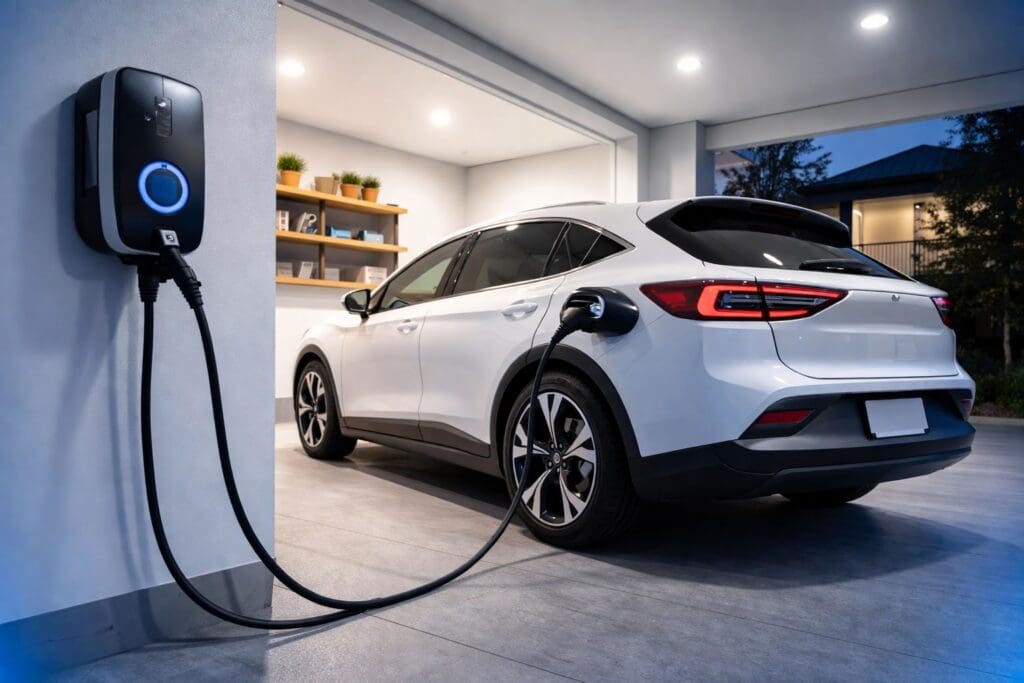
Level 2 Charging uses a 240-volt connection. Same voltage as your dryer or oven. This delivers 25-30 miles of range per hour. A full charge overnight becomes realistic.
Level 2 is what most EV owners want. It’s also where electrical requirements get serious.
What Your Home Needs for Level 2 Charging
Level 2 chargers require specific electrical infrastructure. Here’s the checklist:
Dedicated Circuit
Your EV charger needs its own circuit. No sharing with other appliances. Most Level 2 chargers require a 40-50 amp circuit. Some high-powered units need 60 amps or more.
Running this circuit from your panel to your garage or driveway requires professional installation. Wire gauge, breaker size, and distance all factor into the equation.
Adequate Panel Capacity
This is where many Charlotte homeowners hit a wall.
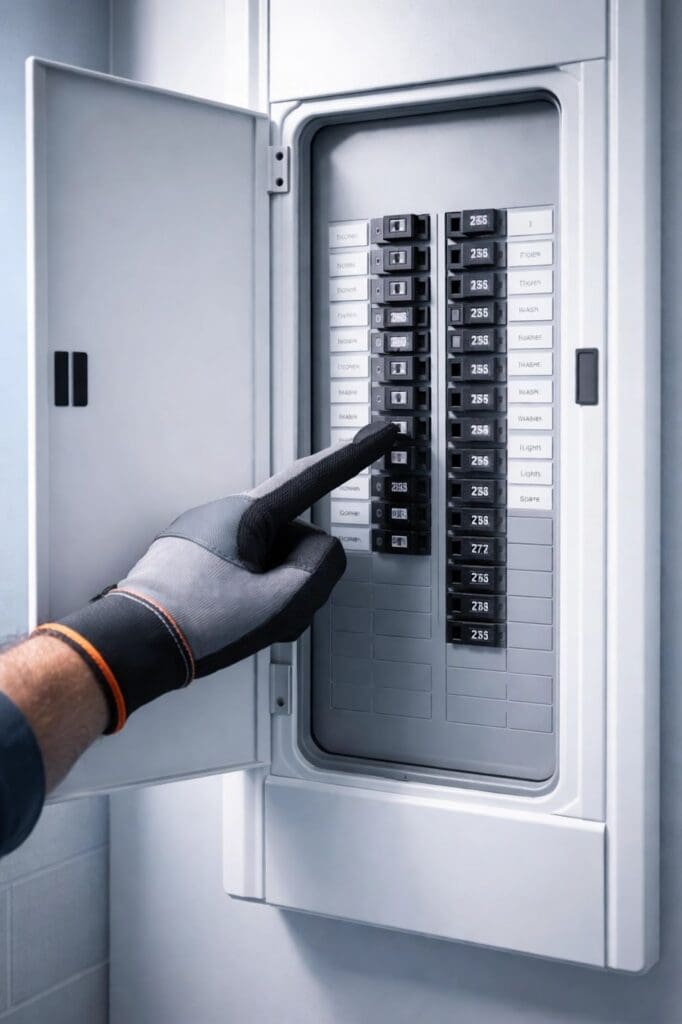
Your electrical panel has a maximum capacity. Most homes have 100-amp or 200-amp service. Every circuit in your home draws from this total.
Add up your existing loads: HVAC, water heater, dryer, oven, appliances. Now add a 50-amp EV charger. Does your panel have room?
Many homes: especially those built before 2000: don’t have enough capacity. A panel upgrade becomes necessary.
Proper Location and Wiring
Where do you park your EV? Garage? Driveway? Street?
The distance between your panel and charging location matters. Longer runs require heavier gauge wire. Outdoor installations need weatherproof equipment and proper mounting.
Signs Your Panel Needs an Upgrade
Not sure if your home can handle an EV charger? Look for these indicators:
- Panel is 100 amps or less
- Breakers trip frequently
- You’ve added major appliances recently
- Your home is older with original electrical
- Panel has no open slots for new breakers
A residential electrician in Charlotte, NC can assess your system and determine what’s needed.
The Panel Upgrade Process
If your home needs more capacity, here’s what to expect:
Assessment
A licensed electrician evaluates your current system. They’ll calculate existing loads, review your panel’s condition, and determine the right upgrade path.
Permitting
Charlotte requires permits for electrical panel upgrades. Your electrician handles this paperwork. Inspections ensure the work meets code.
Installation
The utility company may need to disconnect power temporarily. Your electrician installs the new panel, transfers existing circuits, and adds capacity for your EV charger.
Final Inspection
The city inspector verifies everything meets code. Once approved, you’re ready for your charger installation.
Most electrical panel service in Charlotte, NC takes 1-2 days for the actual work. Permitting and scheduling add to the timeline.
Choosing the Right EV Charger
Chargers vary in power output, features, and price. Consider these factors:
Power Output
- 32-amp chargers: Good for most EVs, adds 25 miles of range per hour
- 48-amp chargers: Faster charging, adds 30-35 miles per hour
- 80-amp chargers: Maximum speed for high-capacity vehicles
Match your charger to your vehicle’s onboard charger capacity. No point paying for 80 amps if your car maxes out at 32.
Smart Features
Many modern chargers offer WiFi connectivity. Schedule charging during off-peak hours. Monitor energy usage. Receive notifications when charging completes.
Some integrate with home energy management systems. Others qualify for utility rebates when they allow load management.
Hardwired vs. Plug-In
Hardwired installations connect directly to your electrical system. More permanent. Cleaner look.
Plug-in units use a NEMA 14-50 outlet (same as RV plugs). Portable if you move. Easier to replace the charger later.
Both work well. Your electrician can advise based on your situation.
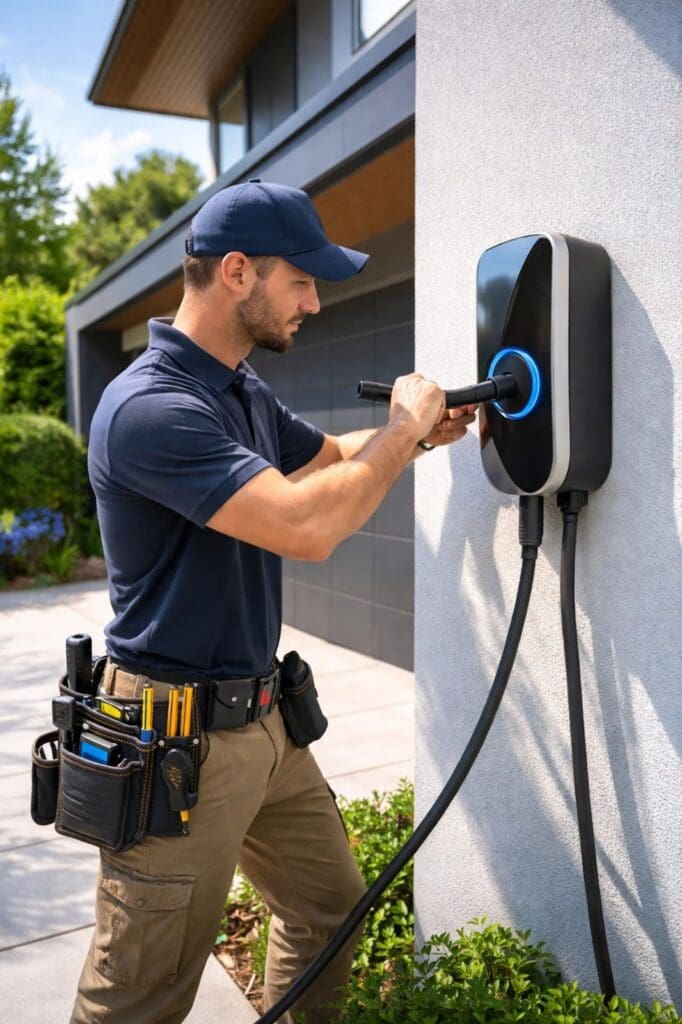
Common Installation Mistakes to Avoid
DIY electrical work causes problems. Here’s what goes wrong when homeowners cut corners:
Undersized Wiring
Using wire that’s too small creates heat buildup. Fire hazard. Code violation. Failed inspection.
Improper Breaker Sizing
Breakers protect wiring from overload. Wrong size means inadequate protection or nuisance tripping.
No Dedicated Circuit
Sharing circuits with other loads causes problems. Tripped breakers. Slow charging. Potential damage to the charger.
Skipping Permits
Unpermitted work creates issues when selling your home. Insurance complications if something goes wrong. Potential code violations.
Outdoor Installation Without Proper Protection
Rain, humidity, and temperature swings damage improperly installed equipment. Weatherproof enclosures and proper mounting matter.
Duke Energy Incentives and Rebates
Charlotte falls within Duke Energy territory. Check their current programs for EV owners:
- Time-of-use rates with lower overnight electricity costs
- Potential rebates for charger installation
- Special EV rate plans
Your electrician can help you understand how to maximize savings.
Why Professional Installation Matters
EV chargers draw significant power continuously. The connection between your panel and charger handles thousands of charging cycles over its lifetime.
Professional installation ensures:
- Proper wire sizing for the distance and load
- Correct breaker selection and installation
- Code-compliant work that passes inspection
- Safe, reliable operation for years
The upfront cost of professional installation pays off in safety and reliability.
Getting Started
Ready to charge your EV at home? Here’s the process:
- Schedule an assessment – A licensed electrician evaluates your panel and determines requirements
- Get a quote – Understand costs for any needed upgrades plus charger installation
- Choose your charger – Select based on your vehicle and charging needs
- Schedule installation – Permitting, installation, and inspection
- Start charging – Wake up every morning with a full battery
Patterson Contracting Services handles EV charger installations throughout the Charlotte area. Panel upgrades. Dedicated circuits. Complete turnkey installation.
Contact us to schedule your assessment. We’ll evaluate your home’s electrical system and provide a clear path to home charging.
Your EV is ready. Let’s make sure your home is too.